
Your needs, this model
Does it fit your priorities?
What analog and computer connections does the exact RecordMaster II document?
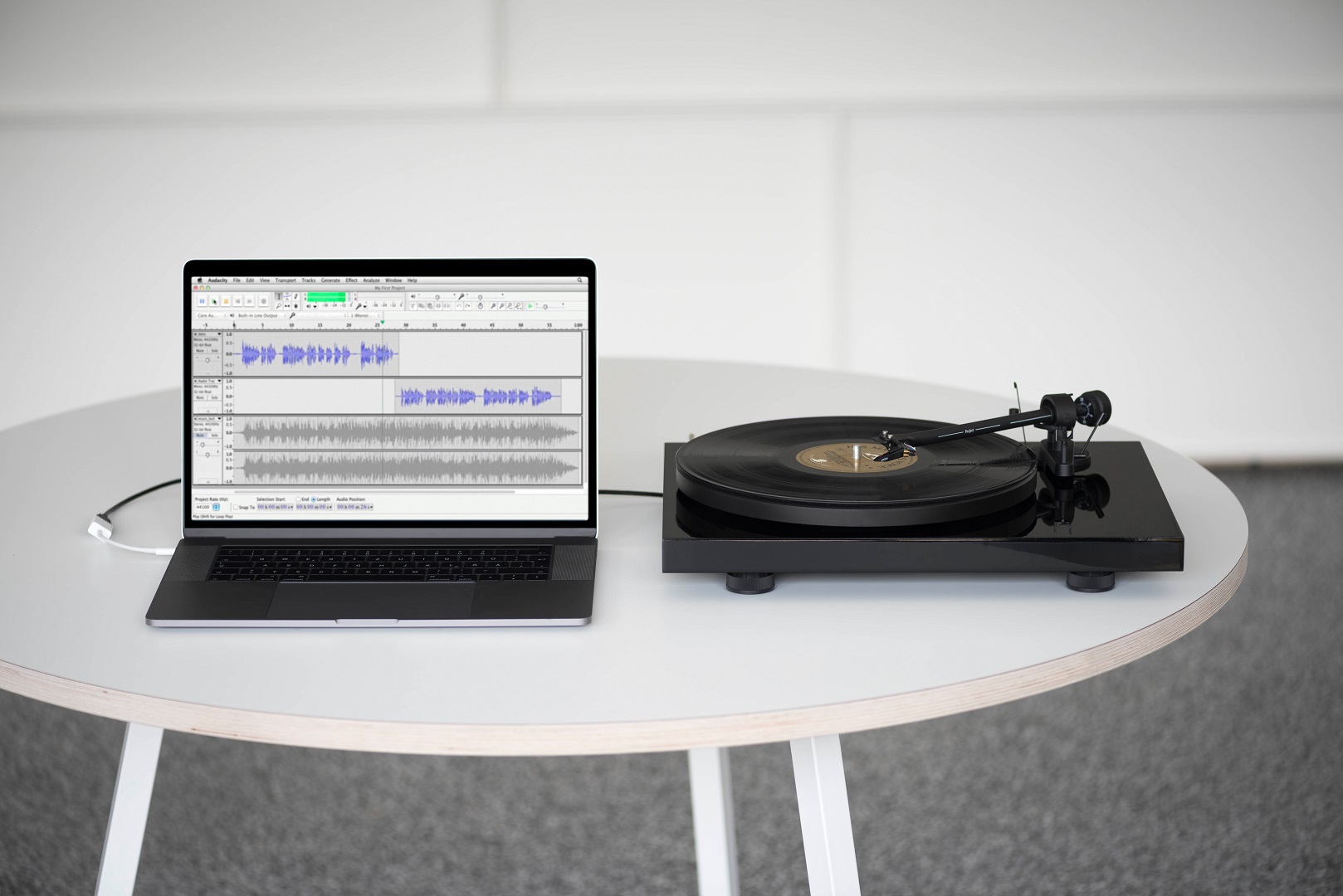
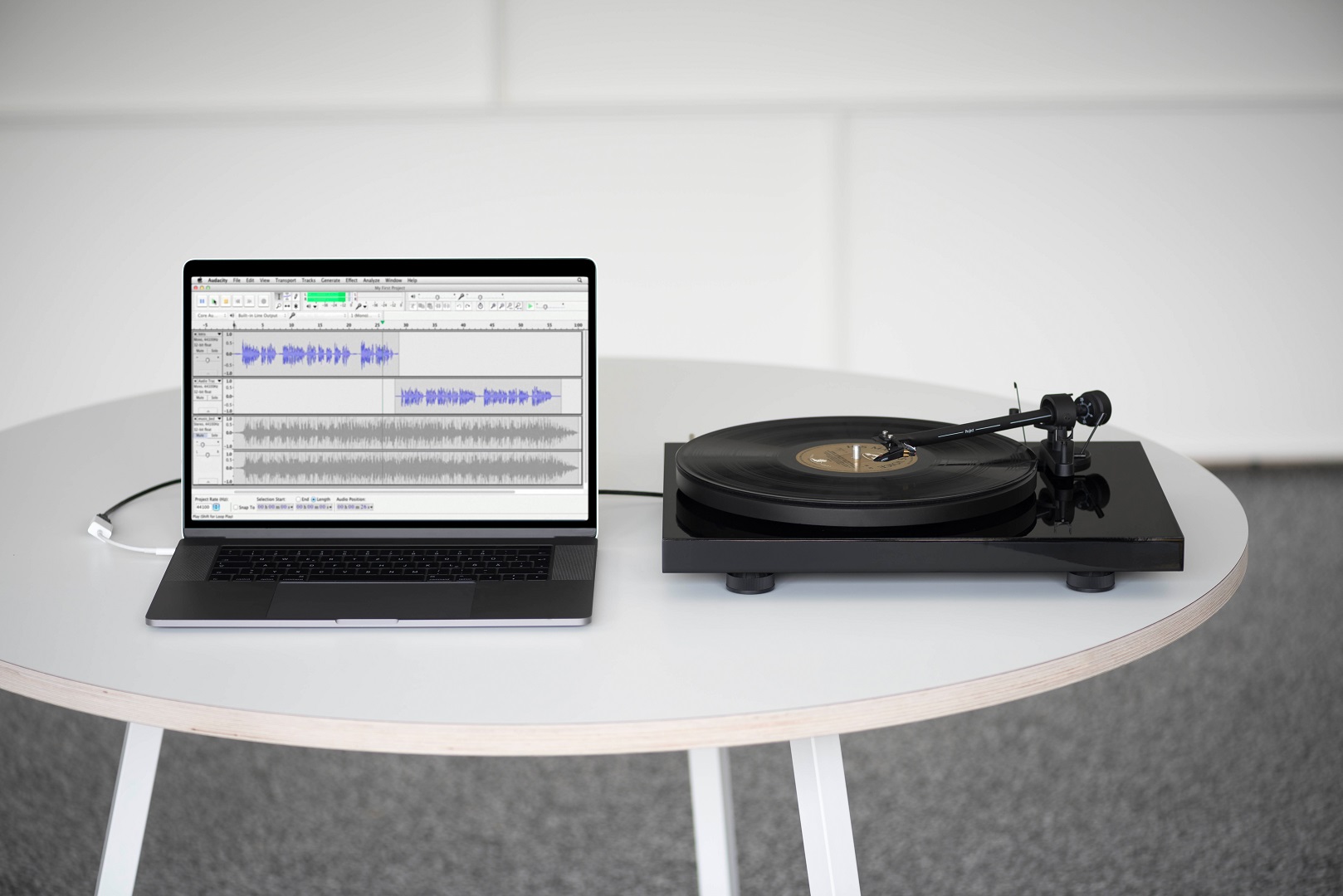
The model page and user guide describe switchable RCA LINE/PHONO output plus a separate USB-B connection. Use LINE with AUX/LINE, PHONO with a compatible MM PHONO input or external stage; do not assume a current recording app or OS is included.
Is the RecordMaster II ready for 78 rpm with its standard fitted stylus?
No. The product page says the OM78 stylus is not included and describes a belt change; the user guide explains fitting the round belt and larger pulley. Verify the separate belt and obtain the correct stylus before relying on 78 rpm.
Is a specific U.S. finish and seller package established?
No exact U.S. seller SKU, offer, finish-level item or current carton is documented here. Global manufacturer sources also vary in one finish list, so confirm the exact finish, adapter and accessory package with the seller.
Pro-Ject’s global turntable directory names the Debut RecordMaster II, and its dedicated page and model documents identify a standalone belt-drive turntable with an Ortofon OM5e cartridge, a switchable MM phono stage and a USB-B output. Those records describe a useful set of system connections, but they do not establish a current U.S. seller item, exact local carton or offer. This is a global model reference, not a claim that the model is currently sold in the United States.
Two analog levels and a separate computer output
The RecordMaster II has a selectable RCA output marked LINE or PHONO. In LINE mode the internal moving-magnet phono preamp raises the cartridge signal for a line-level input such as AUX; that is the documented route for a compatible powered speaker or an amplifier’s line input. Switch to PHONO when the next component is a compatible MM phono input or external phono stage. The setting matters: sending a line-level signal into a PHONO input is not the same connection as selecting PHONO output.
USB-B is a third route, not a substitute for the analog outputs. Pro-Ject describes simultaneous connection to an amplifier and a PC or Mac, and its product sheet lists a 16-bit Delta-Sigma converter with sampling up to 48 kHz. The older user guide calls the USB device a “Microphone USB Audio CODEC” and gives a Windows 7 setup example. It also recommends a direct computer USB socket rather than a hub. That is useful historical operating information, not a guarantee of current operating-system, recording-software or file-format support. The manual says a recording program may need to be obtained separately; it does not describe a bundled digitizing application.
Seventy-eight rpm is a changeover, not a button press
The normal speed selector electronically changes between 33 and 45 rpm. Pro-Ject also documents 78-rpm playback, but the route is more involved: its page calls for a different OM78 stylus, which is not included, and a belt change; the user guide explains that the platter must be removed to fit the round belt on the larger pulley. So the 78 label does not mean this arrives ready to play shellac records with the standard fitted stylus. Confirm the optional belt and obtain the correct stylus before treating that format as part of a specific seller’s package.
For ordinary records, the product sheet lists a 300 mm steel platter with felt mat, a 1.3 kg platter weight, an 8.6-inch aluminium arm and a pre-fitted OM5e. The user guide shows a lift lever, balance and tracking-force setup, and anti-skating adjustment; it is not a set-and-forget automatic workflow. The documents do not specify automatic arm return or an end-of-record stop, so do not assume either feature from electronic speed control.
Check the exact finish and package
The current product page’s feature list gives piano black, red and white high-gloss finishes plus walnut matte. The older product-information sheet repeats that list in its feature bullets but shortens it in a later paragraph to black, red and walnut. That inconsistency is not enough to map a finish-level seller SKU; verify the exact finish shown on the item being considered. The documents list a 15 V DC power supply and dust cover, and the older manual describes a universal supply with interchangeable country socket adapters. That general description still does not prove which adapter or seller carton accompanies a particular U.S. item.
The model’s strongest documented distinction is its combination of switchable analog output and USB digitizing, alongside a separate mechanical change for 78-rpm playback. It should not be conflated with the Debut E HP: that model’s materials emphasize an onboard headphone amplifier, while the RecordMaster II’s documentation emphasizes USB recording. Neither feature should be transferred to the other turntable merely because both names begin with “Debut.”
What the evidence does and does not settle
The exact manufacturer page and linked product information support the RecordMaster II’s identity and feature outline; the user guide gives model-specific setup and connection instructions. The source material does not identify a U.S. item code, a present local offer, current stock or the contents of a particular seller’s box. If those details matter, match the full model and finish on the seller’s listing and confirm the power adapter, optional 78-rpm belt and OM78 stylus directly. This assessment is based on manufacturer documentation; it does not report listening tests, ownership or measurements made here.
Key specifications
Key details at a glance
| Drive | Belt drive |
|---|---|
| 78-RPM play option | Yes |
| Included cartridge | Ortofon om5e, fitted |
| Built-in phono preamp | Yes |
| Manual tonearm cueing | Yes |
| Platter | 300 mm steel platter with felt mat; 1.3 kg platter weight. |
Use the exact model’s instructions for operating limits, supplied equipment and version differences.
Sources for this review
Sources for this assessment
Check your phono route before choosing
Check each model's documented input route, arm operation, and body limits. Use the finder to compare supported phono-system arrangements without assuming adjacent models share features.