
Your needs, this model
Does it fit your priorities?
Can it connect to a line-only powered speaker directly?
No. The manual specifies PHONO sockets and a correctly matched MC input, or a separate MC phono stage before the line input.
Can it play 78 rpm?
Yes, with the separate round belt documented in its manual; the platter must be removed for the belt change before selecting 78.
Is every PHONO input compatible?
No. The WPH 175 is specified at 0.5 mV and 50–200 ohms; verify the receiver input supports an MC cartridge or add a matching MC phono stage.
The directory card says “VPO 175 Turntable,” while the linked product page calls the model “175 – The Vienna Philharmonic Recordplayer.” The exact destination and its dedicated manual resolve the title variation: this is Pro-Ject’s numbered 175th-anniversary turntable, not the separate Classic Reference setup paired with a VPO-175 cartridge. The manufacturer identifies a limited run of 175 examples in Dark Cello and Bright Violine finishes. It is a complete belt-driven deck with a specially made moving-coil cartridge, but its global documentation does not establish a current U.S. offer or a U.S. seller carton.
A numbered edition with a model-specific cartridge
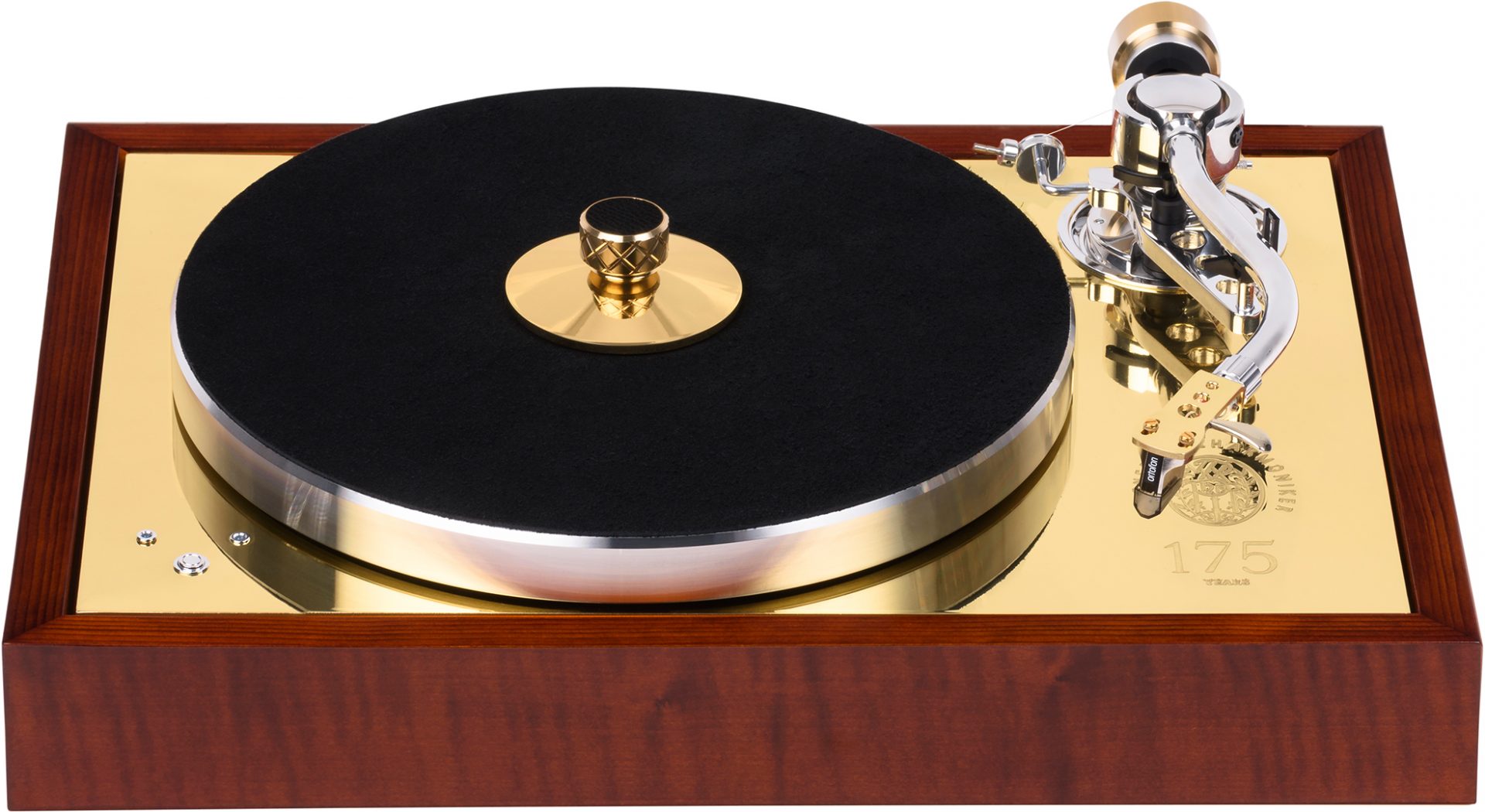
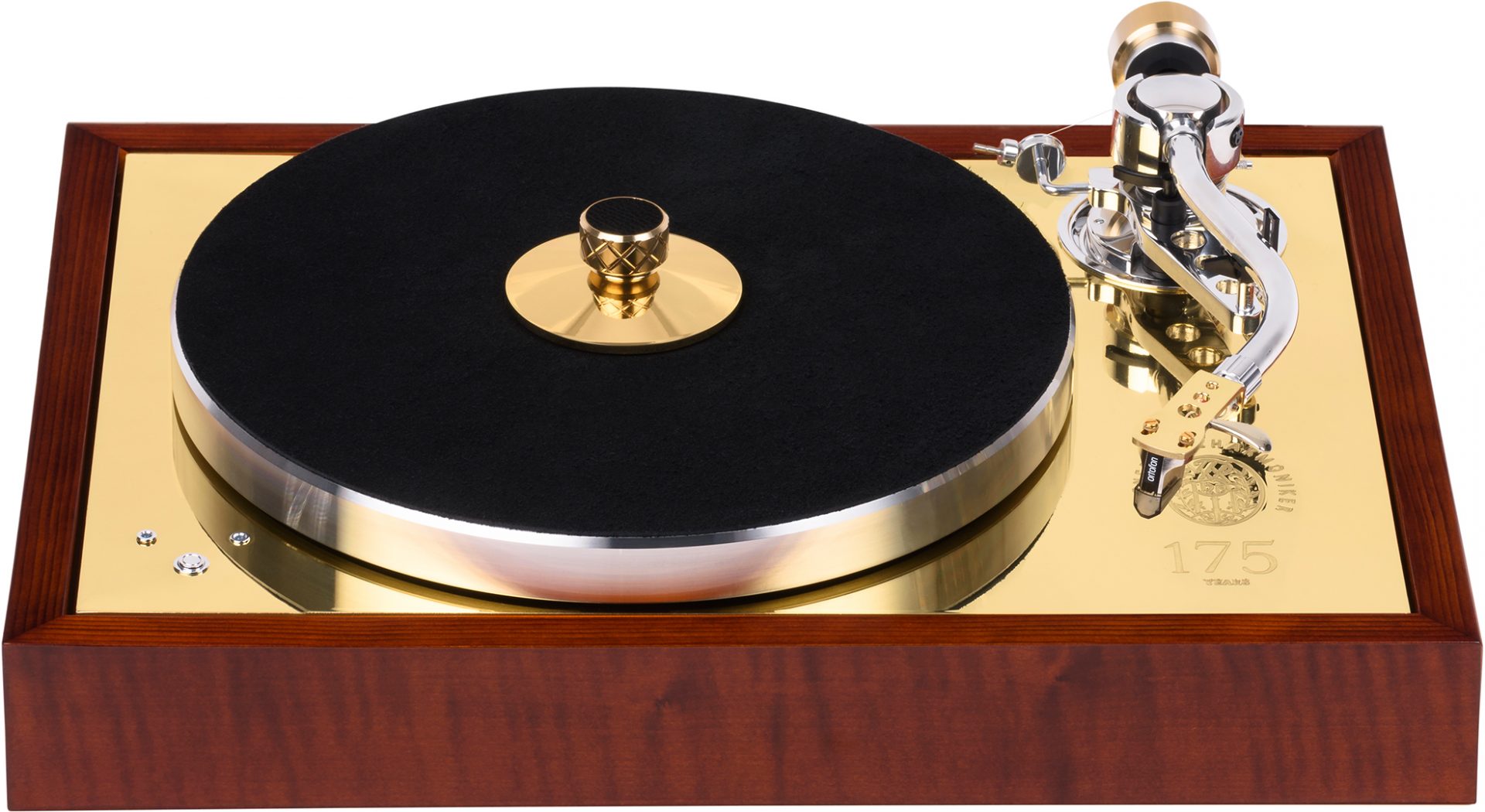
Pro-Ject’s product information describes a wooden chassis and a hand-selected Ortofon cartridge made for the anniversary edition, named the Ortofon 175 or WPH 175 in the documents. The sheet identifies it as a moving-coil design; the exact guide gives 0.5 mV output, a recommended 50–200 ohm MC input load and 25 mN tracking force. The turntable uses a 9-inch S-shaped aluminium arm with a brass headshell, a 300 mm aluminium platter, belt drive and electronic 33/45 selection. The official picture used here shows the Dark Cello version with its wood surround and gold-colored deck; Pro-Ject also lists Bright Violine, which the image does not depict. The page lists a record clamp, leather mat, dust cover, phono cable, precision scale and power supply among its accessories. The manufacturer describes the line as 175 examples and the product sheet names both finish choices. These are edition details, not evidence of remaining stock or the exact contents of an individual resale listing. The “175” edition should not be collapsed into another product simply because that product uses a similarly named cartridge.Plan for a proper MC phono input
The dedicated user guide shows RCA phono sockets and says to connect the turntable to a phono input with appropriate matching and amplification for the cartridge. It says ordinary CD, tuner, tape and video line inputs are not suitable by themselves; if an amplifier has no appropriate phono input, a separate phono stage for an MC cartridge is needed before a line-level input. The manual’s 50–200 ohm recommendation and low 0.5 mV cartridge output make it important to check that the receiver’s PHONO input really supports MC rather than assuming any input labeled PHONO will do. The deck provides 33 and 45 rpm by its speed control. For 78 rpm, the manual requires removing the platter, replacing the flat belt with the separate round belt around the sub-platter and larger pulley step, then selecting 78. The round belt is listed in the manual’s supplied parts. This is a physical belt change, not an additional speed selected with no setup. The exact documents support manual cueing and arm setup; they do not establish automatic start, return or end-of-side stopping.Useful footprint data, with the open-lid distinction
The closed-lid width is not perfectly consistent across the exact edition documents: the current product page lists 460 × 131 × 351 mm, while the dedicated manual and 2018 product sheet say 462 × 131 × 351 mm. The manual also lists a taller 462 × 423 × 390 mm envelope with the cover open. Height, depth and open-lid width agree, but check the actual unit’s footprint if two millimetres matter to a shelf fit rather than treating the page and documents as identical. The manual and sheet list 13 kg and a universal 15 V / 1.6 A DC supply, while the product page describes region-appropriate 110/120 V or 230/240 V supply options. The exact local power adapter supplied with any particular used or dealer unit still needs checking; do not treat the global options as proof of a U.S. carton. The current official page labels the edition sold out. The former U.S. product route redirects to the global site, and the current U.S.-selected dealer locator identifies a distributor and dealers rather than an item-level inventory. Neither source reconstructs a historical U.S. package or confirms present availability. For any exact listing, verify the serial/edition identity, Dark Cello or Bright Violine finish, WPH 175 cartridge, power adapter, accessories and return terms. This reference is drawn from manufacturer material, not ownership or listening tests. Primary sources: Pro-Ject 175 product page, its edition information and user guide.Key specifications
Key details at a glance
| Drive | Belt drive |
|---|---|
| Documented record speeds | 33 / 45 / 78 |
| 78-RPM play option | Yes |
| Included cartridge | Ortofon wph 175 / ortofon 175 selected moving-coil cartridge |
| Built-in phono preamp | No |
| Manual tonearm cueing | Yes |
| Platter | 300 mm aluminium |
Use the exact model’s instructions for operating limits, supplied equipment and version differences.
Sources for this review
Sources for this assessment
Check your phono route before choosing
Check each model's documented input route, arm operation, and body limits. Use the finder to compare supported phono-system arrangements without assuming adjacent models share features.