
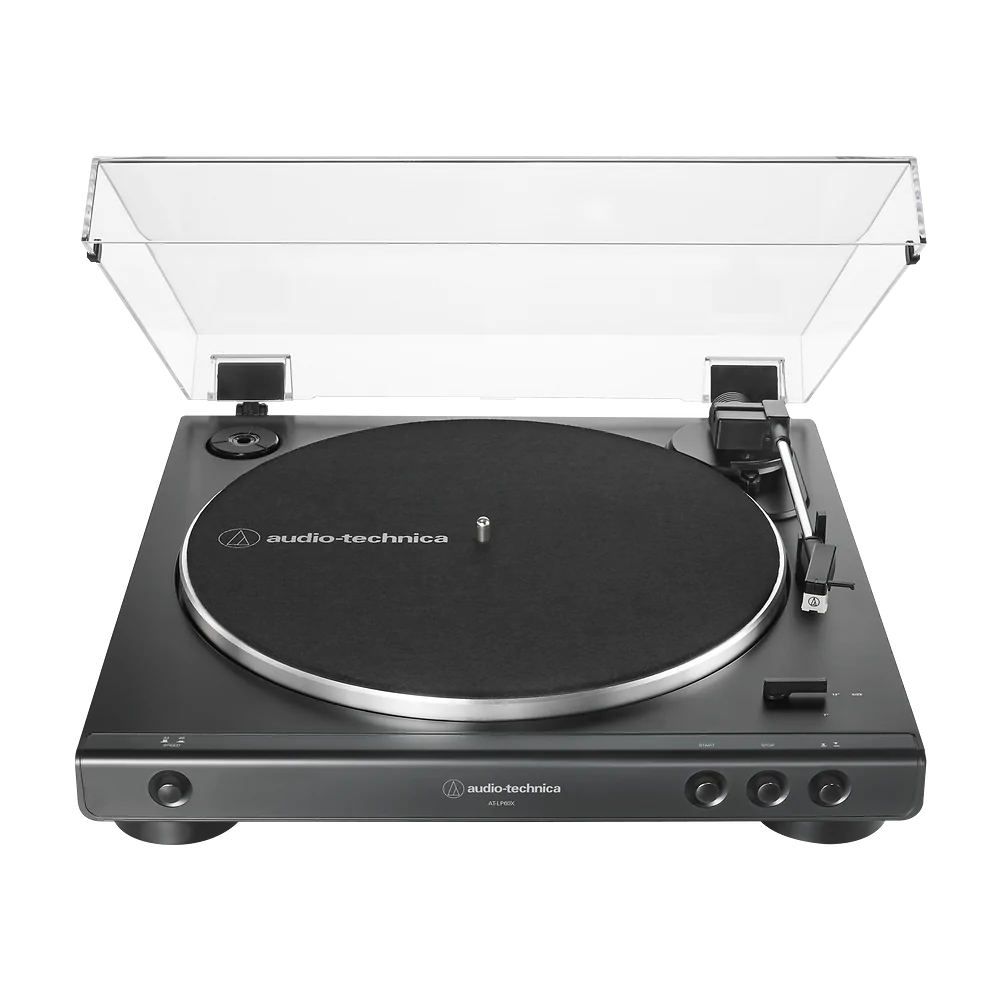
Your needs, this model
Does it fit your priorities?
Does the AT-LP60X need an amplifier with a PHONO input?
No. Its built-in phono stage can be set to LINE for powered speakers or an amplifier AUX/LINE input; choose PHONO only for a compatible receiver input or external phono stage. The turntable still does not supply speakers or speaker power.
Explore this need in the finder →Can I cue the AT-LP60X by hand even though it is fully automatic?
Yes. The manual documents using the lift button to raise the tonearm, place it over the chosen groove and lower it. Automatic start/end operation remains available, but the selected record size and speed still matter.
Explore this need in the finder →How much shelf space should I plan for the AT-LP60X?
Audio-Technica lists a 14.15-inch width and 14.70-inch depth. Allow more room than those body measurements for the hinged cover, cable bends and access to controls.
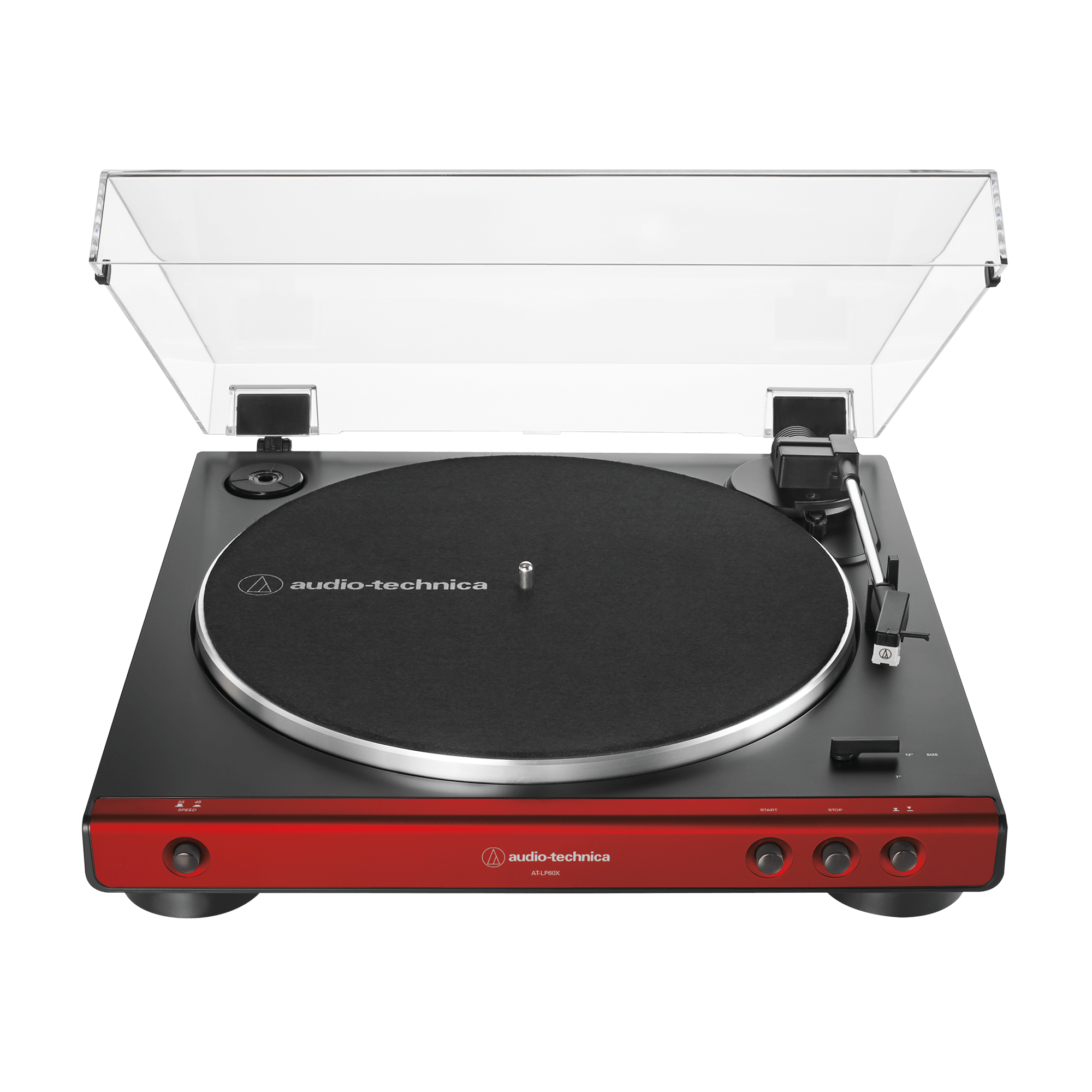
Explore this need in the finder →The AT-LP60X is a compact, two-speed, fully automatic belt-drive turntable with a built-in switchable phono preamp. This review is for the exact black U.S. selector edition AT-LP60X-BK. The current product page also lists other finish codes, and its purple AT-LP60X-PL page plus the exact red AT-LP60X-RD selector image are treated as finish-only package variants rather than extra feature configurations. The assessment uses Audio-Technica's U.S. product page and AT-LP60X manual; it does not claim listening tests or personal use.
Automation is convenient, but the controls still need correct setup
Audio-Technica describes the LP60X as fully automatic. The manual's ordinary sequence is to select record size and speed, then press START; at the end of a record the tonearm returns to its rest. The manual also documents manual cueing: use the lift control to raise the arm, position it over the desired groove, and lower it. That makes this a useful choice for someone who wants automatic start and return but still wants the option to cue by hand. Auto-stop is not a promise that every unusual record will trigger the mechanism, so use the stated size and speed selections and press STOP if the arm does not return as expected.
The listed speeds are 33⅓ and 45 RPM. The reviewed configuration does not have a documented 78-RPM setting. The manual says not to change the record-size setting during playback and cautions against bumping the deck while it is running. This is a straightforward home-listening mechanism, not a deck documented for DJ handling. A felt mat, aluminum platter, belt drive and removable hinged dust cover are part of the stated configuration.
Choose the output level to match the next component
The built-in phono preamp is switchable, so the LP60X is not limited to receivers with a PHONO input. Set the selector to PHONO for a compatible receiver or integrated amplifier's PHONO input. Choose LINE for AUX/LINE inputs, powered speakers with a line input, or a computer line input. The manual explains that a phono input and an ordinary line input are different; sending the wrong level can produce incorrect volume or distortion. An external phono stage can also sit between the deck's PHONO output and line-input equipment, but it is not necessary for the documented built-in-stage route.
The turntable is not a speaker or power amplifier. Powered speakers need their own amplification, while passive speakers need a separate amplifier. The supplied lead terminates in dual RCA plugs from a 3.5-mm stereo connector at the deck, so check the exact component's input and cable arrangement rather than assuming a rear pair of RCA sockets. Bluetooth and USB recording are not listed features on this model page. If wireless listening matters, compare the LP60XBT; if digitizing records over USB is essential, the separate LP60XBT-USB adds that connection.
Expect basic assembly and stylus maintenance
The manual lists the platter and drive belt as parts to assemble before use. It instructs the owner to seat the platter, place the belt on the motor pulley without twisting it, fit the felt mat and rotate the platter by hand ten times to reset the mechanism and check the belt path. Level the deck and keep it away from strong vibration; Audio-Technica also cautions against placing it beside speakers. This is normal setup work, even though the later record-playing routine is automatic.
The cartridge is described as an integral Dual Magnet design attached to the headshell. The maker identifies a replaceable ATN3600LC stylus and lists the elliptical ATN3600LE as an optional replacement/upgrade. That gives the owner a clear wear-part path, but it is not the same as the detachable universal headshell and cartridge-swap arrangement on an AT-LP3XBT. Do not assume that a cartridge upgrade is a drop-in procedure based only on a replacement stylus listing. The manual calls for disconnecting the adapter and handling the stylus and cartridge body carefully; its replacement interval is a rule of thumb, not a measured life guarantee for every record or listening routine.
Measure the body and leave room to work
The published body dimensions are 14.15 inches wide, 14.70 inches deep and 3.84 inches high, with a stated weight of 2.6 kg. The depth is nearly 15 inches even though the deck is relatively narrow. Those figures do not include the room needed to reach the controls, route cables, remove or raise the cover, or handle a record. Measure the actual shelf and the working space around it rather than treating the body figure as a complete installation envelope.
The current manual's package list includes the turntable body, felt mat, platter with belt, AC adapter, 45-RPM adapter and RCA audio cable; the product page also identifies a removable hinged cover. Check the exact new, open-box or used offer for those parts and for a power adapter appropriate to the U.S. outlet. The manual's adapter is external, and the exact rating label on the offer should be checked before connection.
How it differs from the nearby LP60X options
The standard LP60X is the simplest of this small family: automatic operation, built-in phono/line output and a replaceable stylus, with no documented wireless or USB audio output. The LP60XBT adds Bluetooth while keeping the same body dimensions and basic wired route. The LP60XBT-USB adds a computer connection for recording as well as wireless audio. All three share the same central operating idea, but the extra connection is a real capability difference, not a color option. The purple AT-LP60X-PL has a separate official page and exact image; the page presents it as the same AT-LP60X configuration, so its finish can be covered by this model assessment without borrowing another model's photo.
Shortlist the LP60X when you want automatic start and end return, manual lift cueing when useful, and both PHONO and LINE paths in a relatively narrow body. Choose another member of the family if Bluetooth or USB digitization is required. These are fit distinctions derived from published features and instructions, not a sound-quality ranking.
The brown and gunmetal codes are separate finish editions
The current U.S. selector lists AT-LP60X-BW and AT-LP60X-GM beside the reviewed AT-LP60X-BK. Audio-Technica's U.S. product-page gallery contains distinct, suffix-specific images for both editions; the images below show their own front-panel colors rather than a recolored black photograph. The shared AT-LP60X page and manual describe the same automatic two-speed mechanism, switchable PHONO/LINE route and included setup parts, without documenting a separate operating or supplied-functional-package change for BW or GM. I therefore treat them as finish identities covered by this functional review, not additional feature configurations. The registered buying-details action on this page is for the reviewed BK model and does not select BW or GM; confirm the exact suffix and included package on an offer. A manufacturer image establishes appearance, not a separate UPC or current stock.
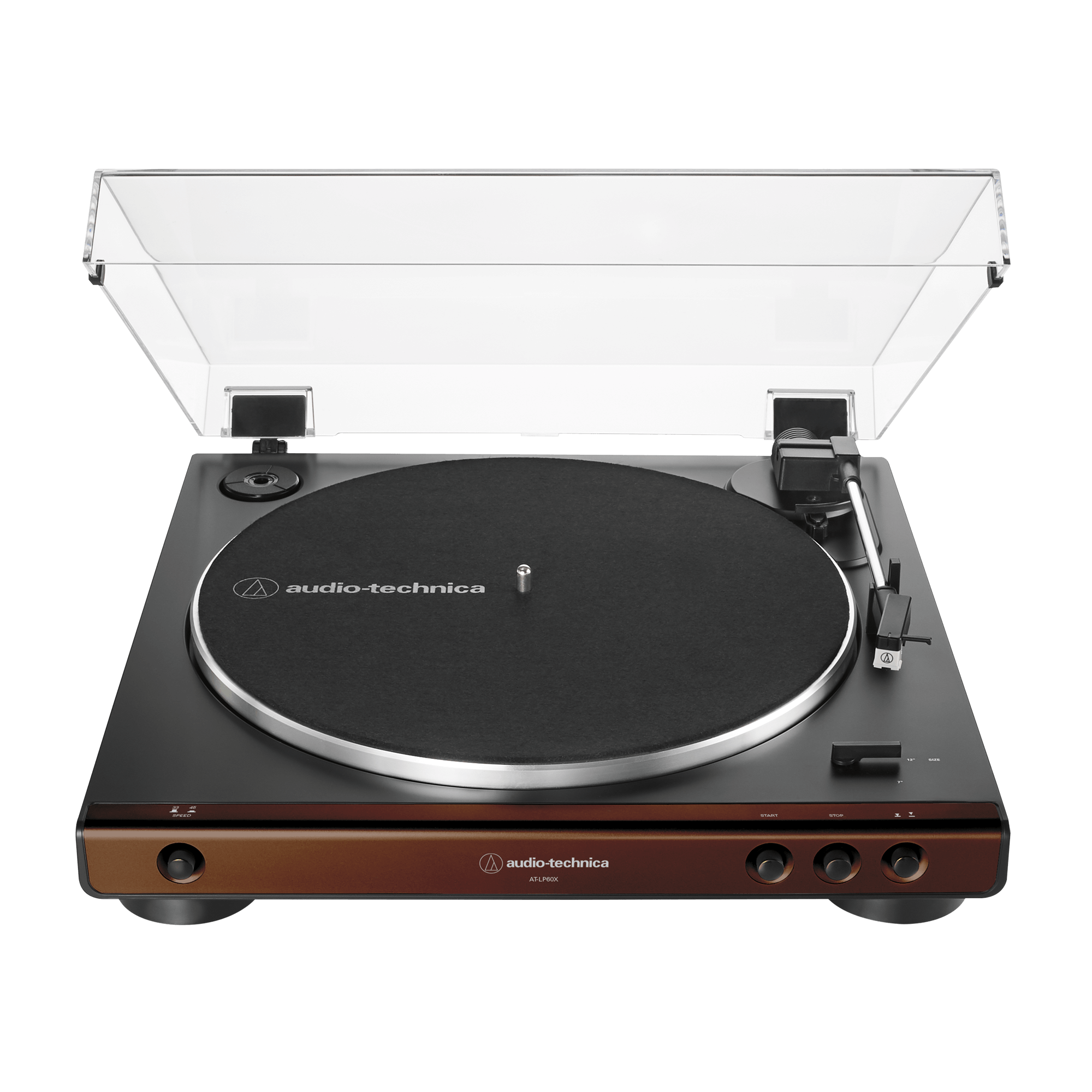
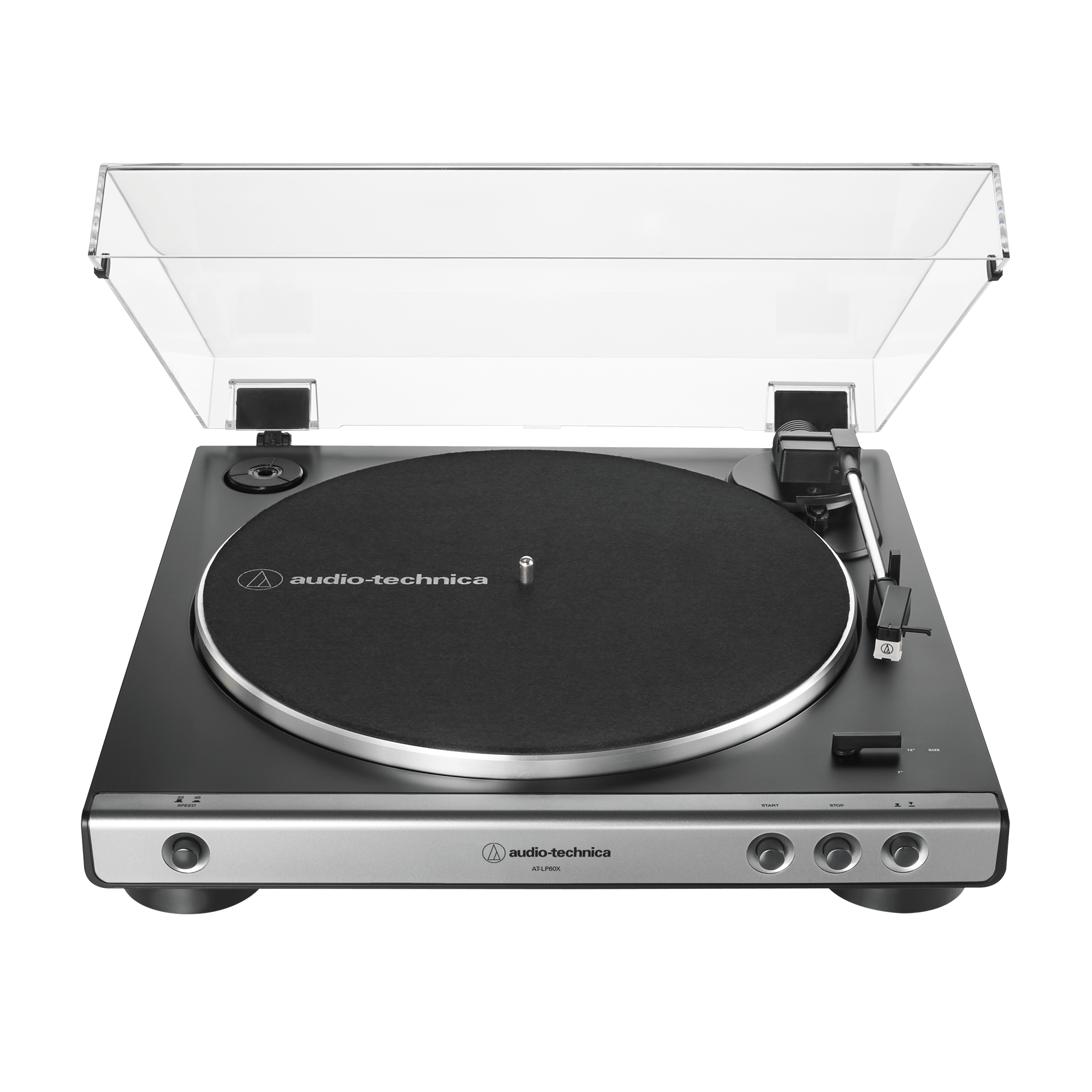
Primary references: Audio-Technica AT-LP60X U.S. product page and AT-LP60X user manual.
Key specifications
Key details at a glance
| Drive | Belt drive |
|---|---|
| Documented record speeds | 33 1/3 RPM / 45 RPM |
| 78-RPM play option | No |
| Included cartridge | Integral audio-technica dual magnet moving-magnet cartridge (manual part diagram names at3600l) |
| Built-in phono preamp | Yes |
| Manual tonearm cueing | Yes |
| End-of-record platter stop | Yes |
| Platter | Die-cast aluminum |
| Platter mat | Felt |
| Body width | 14.15 in |
| Body depth | 14.7 in |
| Body height | 3.84 in |
| Published phono output | 2.5 mV |
Use the exact model’s instructions for operating limits, supplied equipment and version differences.
Sources for this review
Sources for this assessment

Check your phono route before choosing
Check each model's documented input route, arm operation, and body limits. Use the finder to compare supported phono-system arrangements without assuming adjacent models share features.