
Your needs, this model
Does it fit your priorities?
Can I use the AT-LP7 with powered speakers that have only a line input?
Yes. Set the selector to LINE and connect the RCA output to a compatible powered-speaker line input. The built-in phono stage is in the signal path, but the speakers still provide amplification.
Explore this need in the finder →Can I use the AT-LP7 with a receiver's PHONO input?
Yes. Set the turntable selector to PHONO and follow the manual's RCA and grounding instructions. Do not send the LINE output into the receiver's PHONO input.
Explore this need in the finder →Is the AT-LP7 the same package as the LP7X?
No. The older LP7 reviewed here includes VM520EB on AT-HS10 and a POM platter; the LP7X is a separate model with VM95E BK/AT-LT10 and an acrylic platter. Match the complete model name and cartridge/platter package before buying.
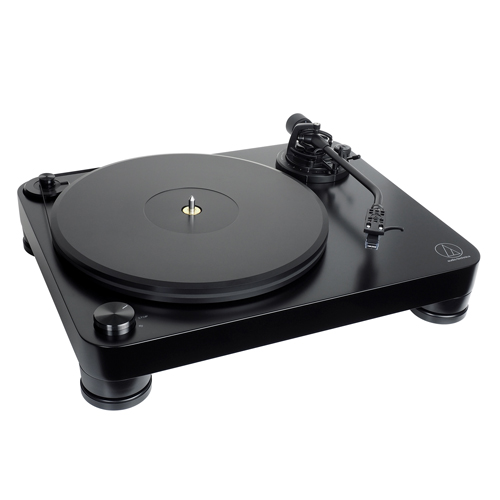
Explore this need in the finder →The AT-LP7 is the older manual belt-drive model in Audio-Technica's current US turntable directory, not the newer AT-LP7X. The difference is easy to miss in a seller title, but it changes the supplied cartridge, headshell and platter material. The LP7 reviewed here has a VM520EB cartridge on an AT-HS10 headshell and a POM platter; the LP7X is a separate model with a VM95E BK/AT-LT10 package and acrylic platter. This analysis uses the exact-model manual and Audio-Technica product pages, not a listening test or claim of ownership.
Two analog routes, one manual arm
The LP7 includes a switchable built-in phono stage. For a compatible receiver or integrated amplifier PHONO input, set the turntable to PHONO and connect RCA plus ground as the manual specifies. For powered speakers or an amplifier's AUX/line input, choose LINE. The manual also supports a separate phono stage: use PHONO into the external stage, then feed its line output to powered speakers or to an amplifier that drives passive speakers. Do not send the turntable's LINE output to another PHONO input.
The stage has MM and MC settings, while the supplied VM520EB is a moving-magnet cartridge, so the stock setup uses MM. The separate selector settings matter: the cartridge switch should suit the cartridge, and the PHONO/LINE switch should suit the next input. The turntable does not contain speakers or power amplification. If you are upgrading the cartridge, check its electrical load, weight and the arm's setup range rather than assuming the presence of an MC setting makes every moving-coil cartridge compatible.
Manual two-speed playback is the operating plan
The maker specifies belt drive and 33⅓/45 RPM, not 78 RPM. The user installs the belt and platter, places the record, lowers the tonearm with the lift control, and returns it manually after playback before using the control to stop. There is no documented automatic start, arm lift, return or platter auto-stop. If hands-off operation matters, that is a mismatch; if manual cueing is what you want, the lift and clamp define the steps but do not remove the need to handle the arm.
The manual also gives an unusual practical instruction: keep the dust cover off while records play. That affects both storage and placement. A cover that opens over the deck may need to be lifted away and set aside before playing, so shelf clearance alone is not the entire use envelope. Keep it in a safe place when removed rather than balancing it where it can fall onto the platter or arm.
Its cartridge package differs from LP7X
The LP7 arrives with a VM520EB cartridge and AT-HS10 headshell. Audio-Technica lists a bonded elliptical stylus, 2.0 g standard tracking force and a range of 1.8–2.2 g; VMN20EB is the listed replacement stylus. The detachable headshell makes cartridge changes possible, but each cartridge needs correct alignment and tracking force, and the manual gives a supported mass range for the head and cartridge. Do not substitute the LP7X's VM95E BK, AT-LT10 or stylus compatibility information just because the model numbers look related.
The manufacturer specifies a POM platter with a 40 mm MDF chassis and a speed-sensor system. Those are construction descriptions, not measurements I performed or evidence of a specific sound. The important buying point is that the older LP7 and later LP7X are not interchangeable packages. Match the full model name, cartridge and platter when comparing listings or replacement parts.
Size, setup and adapter checks
The manual lists the body at 17.72 inches wide, 13.86 inches deep and 6.18 inches high, with an 8.3 kg weight excluding the dust cover. Leave additional room for the cable bends, rear controls, arm motion and the required cover-removal routine. The body dimensions are not a full installation envelope. The manual's initial setup requires mounting the platter and belt, fitting the counterweight and headshell, leveling the deck, balancing the arm, and setting the cartridge's tracking force and anti-skate.
The listed new package includes a counterweight, belt, cartridge/headshell, 45 adapter, RCA cable, cover and external adapter. Confirm that used listings include the correct adapter and that its label matches the intended supply; visually inspect the stylus and confirm the cartridge model. Audio-Technica's direct US product URL did not return to my retrieval, so a separate US retail SKU, exact adapter part number or seller package is not asserted.
Who should consider this exact model?
Consider the older AT-LP7 if you want a manual two-speed belt-drive deck with a built-in MM/MC stage and the supplied VM520EB cartridge, and you are comfortable with hands-on setup and removing its dust cover during playback. Pause if you want USB, Bluetooth, auto-stop, automatic tonearm handling, 78 RPM or a cover that stays on during play. The LP5X may better suit a buyer who needs direct drive and USB capture; the LP7X is the newer related model but has different supplied parts and construction. Those comparisons describe documented workflows, not an ordering of sound quality.
Before buying, verify that the offer is AT-LP7 rather than LP7X, list the exact cartridge and headshell, check the adapter, belt, counterweight and cover, and measure both the body and the surrounding operating area. No price, availability, ASIN, rating, test result or personal listening experience is claimed.
Primary references: Audio-Technica's AT-LP7 English user manual and exact-model product page.
Key specifications
Key details at a glance
| Drive | Belt drive |
|---|---|
| 78-RPM play option | No |
| Included cartridge | Audio-technica vm520eb vm dual-magnet cartridge on at-hs10 headshell |
| Built-in phono preamp | Yes |
| Manual tonearm cueing | Yes |
| End-of-record platter stop | No |
| Removable cartridge body or headshell | Yes |
| Platter | Pom (polyoxymethylene) |
| Platter mat | Not separately listed in the manufacturer package; page specifies a pom platter |
| Body width | 17.72 in |
| Body depth | 13.86 in |
| Body height | 6.18 in |
| Published phono output | 4.5 mV |
Use the exact model’s instructions for operating limits, supplied equipment and version differences.
Sources for this review
Sources for this assessment

Check your phono route before choosing
Check each model's documented input route, arm operation, and body limits. Use the finder to compare supported phono-system arrangements without assuming adjacent models share features.