
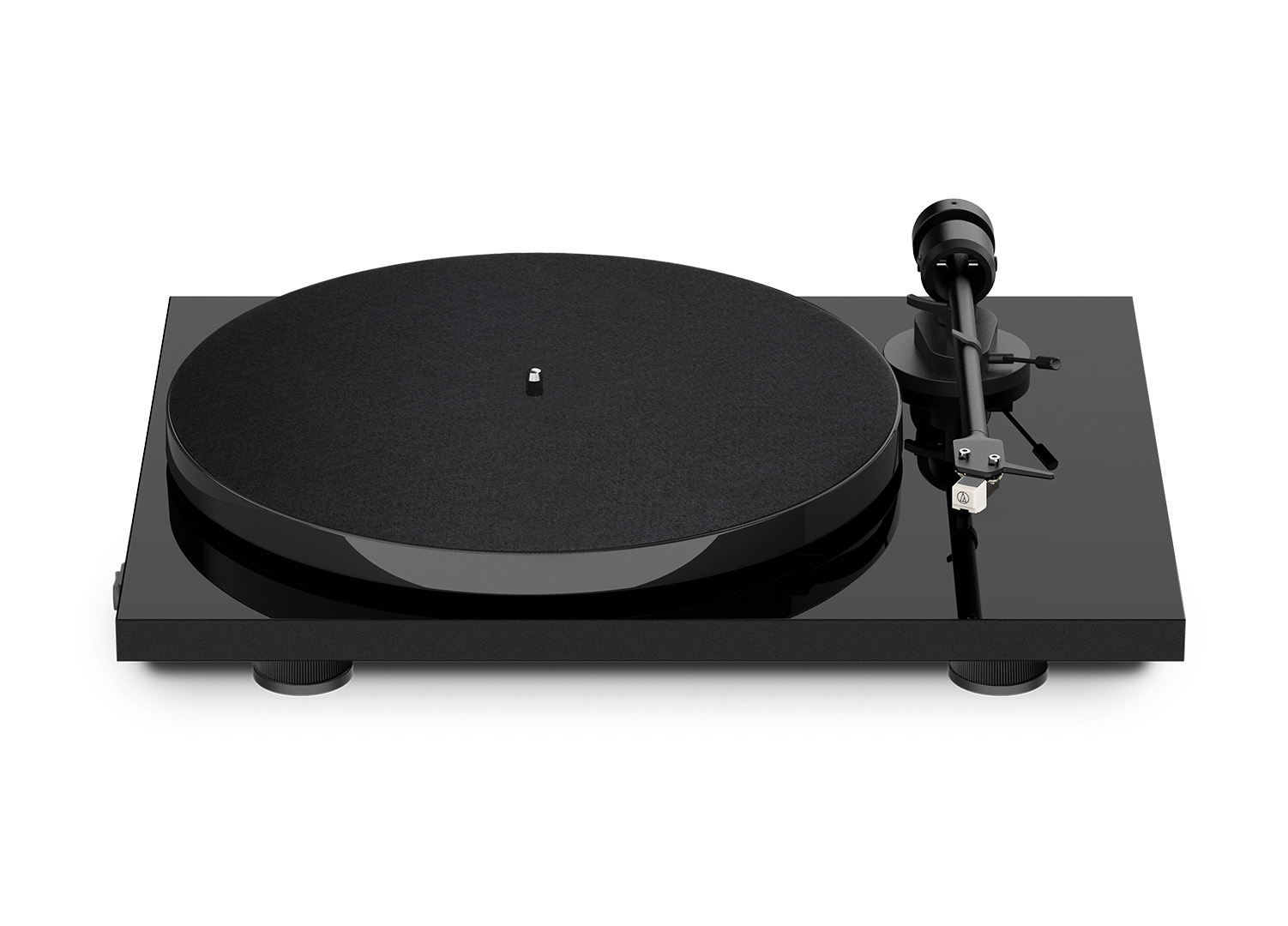
Your needs, this model
Does it fit your priorities?
Can E1 BT send records to Bluetooth headphones or a speaker?
It has a Bluetooth transmitter, so it can send record playback to a compatible receiving device. It does not accept Bluetooth music from a phone; because official and U.S. retailer pages disagree on transmitter version/codecs, confirm the exact receiver compatibility rather than assuming a codec.
Explore this need in the finder →Can E1 BT use a wired receiver PHONO input?
Yes, if you set the analog output selector to PHONO to bypass the internal stage and the receiver input supports MM cartridges. Bluetooth is a separate output path, not a reason to leave the switch on LINE for a PHONO input.
Explore this need in the finder →Does E1 BT start, lift or return the arm automatically?
No automatic arm sequence is documented. The manual describes user-controlled cueing and 33/45 speed selection; it does not specify a record-end auto-stop, so the stop feature remains unknown.
Explore this need in the finder →The Pro-Ject E1 BT adds a Bluetooth transmitter to the E1 Phono’s switchable MM stage. It is still a manual turntable, not an all-in-one system: there are no built-in speakers, and passive speakers still need an amplifier. The exact U.S. package assessed here is Gloss Black with an Audio-Technica AT3600L moving-magnet cartridge. The useful question is whether you need both wired PHONO/LINE choices and a wireless transmit path—not whether “Bluetooth” appears on the box. This assessment is based on model documents and specific U.S. item records, not personal ownership, listening or testing.
Bluetooth carries record playback outward
The user guide describes an E1 BT transmitter that sends the turntable’s playback to an external Bluetooth receiver. That can be a receiving speaker, headphone system or amplifier, provided that device can pair and accept the signal. The deck does not accept music from a phone over Bluetooth, and its analog stage does not turn it into a speaker amplifier. For passive speakers the chain still needs a receiver or amplifier with speaker outputs; for powered speakers, verify that they are the intended receiving device. The manual’s pairing instructions make the receiving component part of setup, so confirm that it can reconnect in the way you expect before relying on wireless playback.
The exact Bluetooth version is not stated consistently across current sources. Pro-Ject’s present product page and information sheet list BT 5.2 and aptX HD/Adaptive, while Audio Advisor’s U.S. listing says Bluetooth 5.0. I do not resolve this discrepancy by picking the larger claim: the fact record confirms a transmitter, but leaves its version and codec unspecified. Check the exact revision and receiving-device compatibility if a codec or latency detail is essential. The official material and seller text are not a substitute for a compatibility check with the device you intend to pair.
The wired switch still matters
For an ordinary AUX/LINE input on powered speakers or an amplifier, choose LINE so the built-in moving-magnet stage supplies phono equalization. For a compatible MM PHONO input, choose PHONO to bypass the internal stage. A separate MM phono stage also requires PHONO output before its own line output feeds powered speakers or an amplifier. Do not cascade LINE into another PHONO stage. These are alternative analog configurations, while Bluetooth is a separate transmit route; if you are using the receiver’s PHONO input, select PHONO even though Bluetooth is also present.
The U.S. package record identifies an AT3600L MM cartridge. The common official manual includes an older generic Ortofon OM 5E reference, but that does not override the exact current seller package and official current product information. The manual describes the BT output selector and its earth connection. Follow both source and receiver instructions for connection, and do not expect wireless operation to correct a wrong PHONO/LINE selection on the analog connection.
Manual playback and published performance limits
The E1 BT remains a user-operated belt-drive model with an electronic 33⅓/45 RPM switch. The manual shows fitting the platter and drive belt and using the lift lever to place or raise the arm. That sequence is not a fully automatic start/return cycle. The inspected official manual and product information do not specify record-end platter auto-stop, so the stop behavior is unknown here; a Bluetooth transmitter does not imply that the arm will lift or the motor will stop at the runout groove. Only 33 and 45 RPM are documented.
Manufacturer information lists an 8.6-inch aluminum arm, ABS-polymer platter, felt mat, 0.7% / 0.6% speed variance and 0.25% / 0.23% wow and flutter at the two speeds, with a 65 dB signal-to-noise figure. These published values are not independent measurements. They help identify the stated platform but do not predict what a worn stylus, warped record, unstable shelf or Bluetooth receiving chain will sound like.
Fit the whole E1, not just its signal features
The current official dimension is 420 × 112 × 330 mm, roughly 16.54 × 4.41 × 12.99 inches for the body. The manufacturer’s open-cover envelope is 420 × 370 × 393 mm. At half-inch questionnaire steps, the body first fits a 17-inch width cap and fits a 13-inch depth cap. These are listed dimensions only. Leave extra space for the lid to open, hand movement around the platter, rear plugs, ventilation around other equipment and the Bluetooth receiver’s location. A compact shelf can fail in practice even if the body alone passes its numeric limit.
Compare the three packages by the connection you need
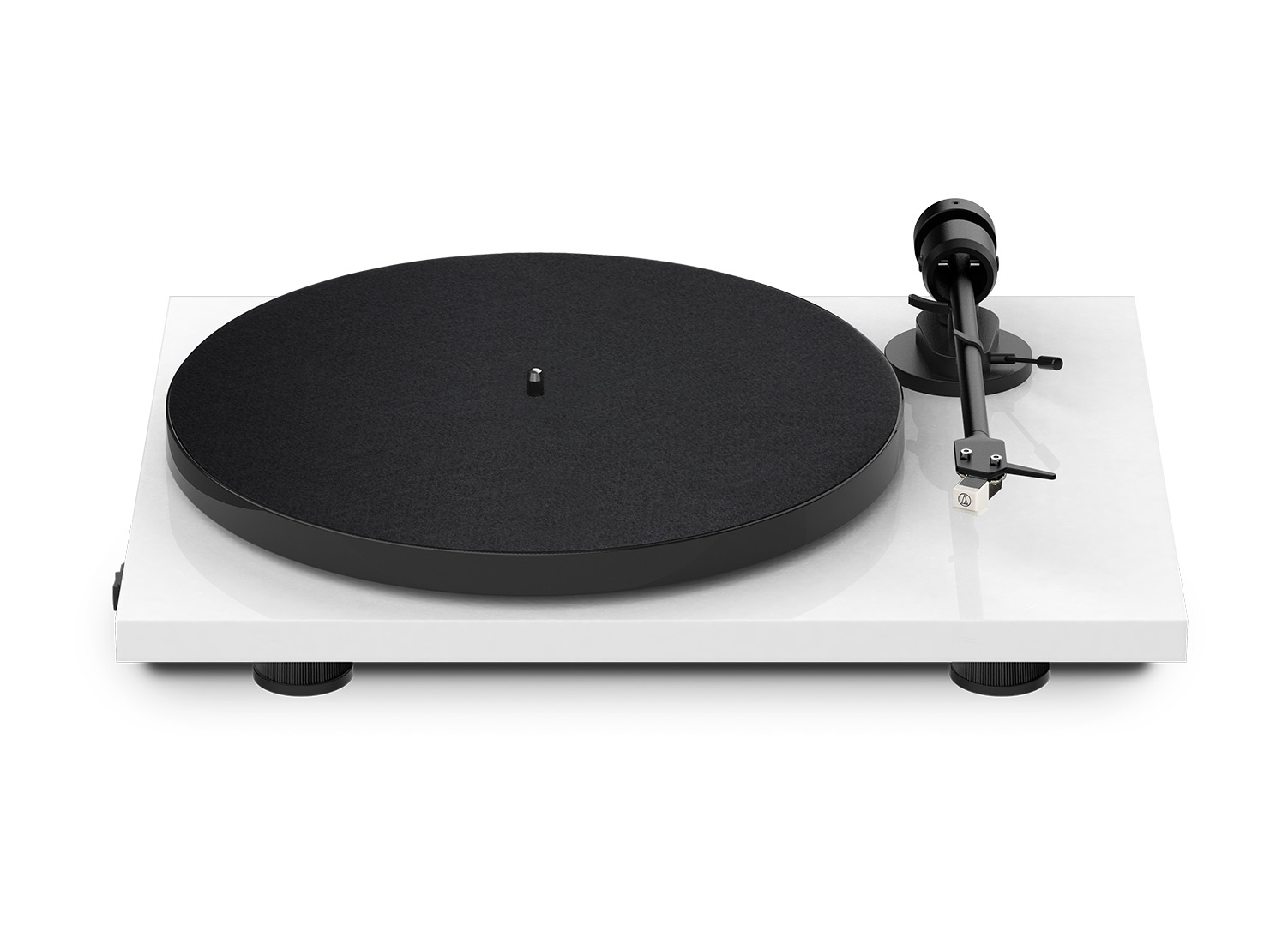
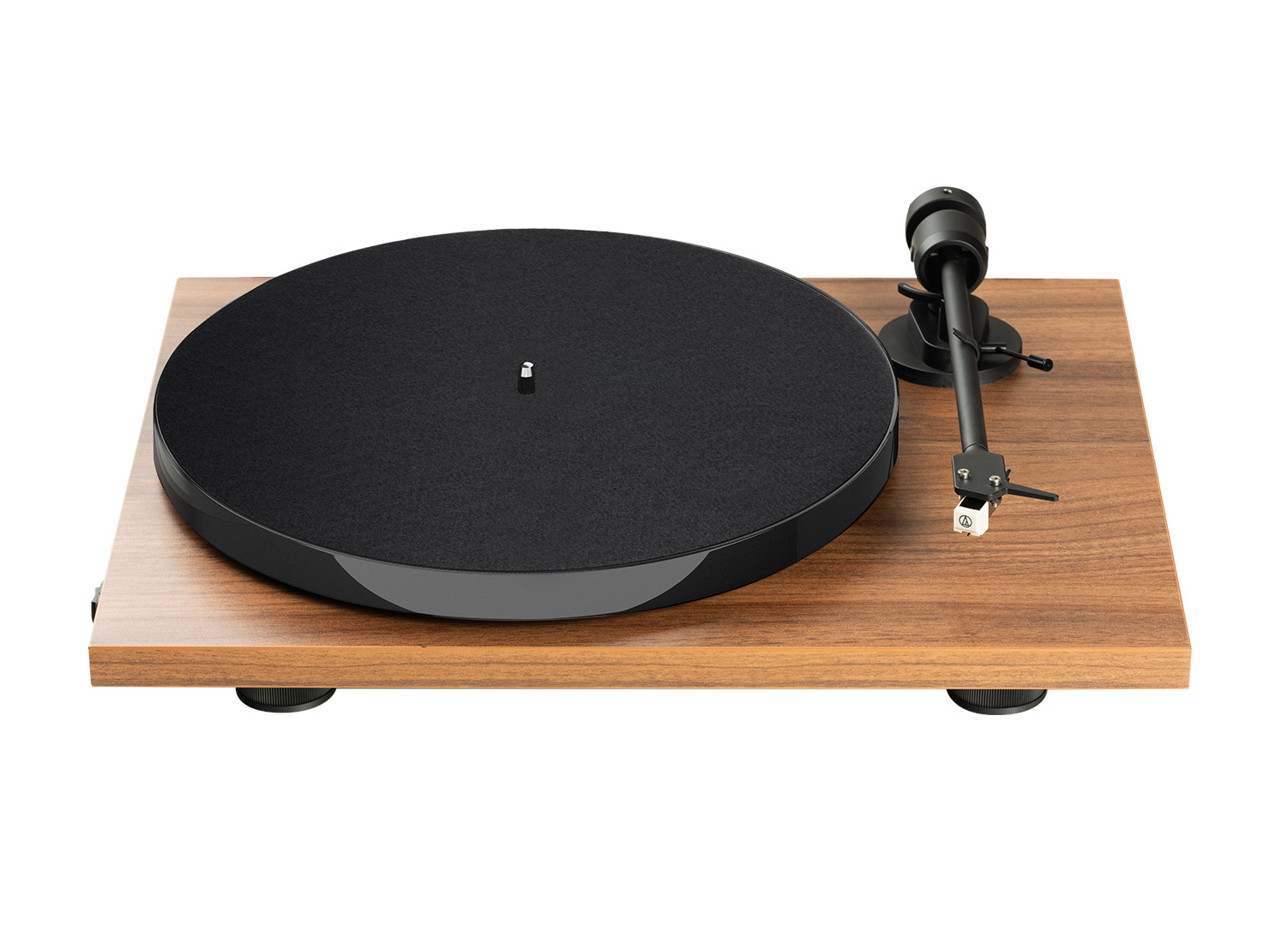
Standard is the most direct choice when an MM PHONO input or separate stage already exists and neither internal preamp nor wireless transmission is needed. Phono adds the switchable MM stage for wired line-level convenience. E1 BT adds wireless transmission on top of those analog routes. The Bluetooth function does not make E1 BT fully automatic or eliminate manual record handling. All three current models are listed in Gloss Black, White and Walnut finish routes in the U.S. records examined here; the photographs below come from official E1 model pages and show the chassis color only. They cannot distinguish which stage or cartridge a retailer includes.
Checks before treating the package as a fit
Confirm E1 BT in the exact U.S. item name and check that it includes the intended AT3600L cartridge and a complete platter/belt setup. For wired listening, select the output to match the destination; for wireless, confirm the intended receiver supports the connection you need. Do not use the “BT” label as proof that it receives phone audio. If your system uses passive speakers, budget for amplification whether you choose the wired or wireless route. Make room for the open cover and verify actual shelf measurements separately. The current reference package is not a claim about a retailer’s live stock, price or shipping offer.
Sources checked: Pro-Ject E1 BT model page; official E1 product information; official shared user guide; official setup guide; Audio Advisor U.S. BT listing. The text is original analysis of those sources; retailer identifiers and configuration descriptions establish package evidence only.
Key specifications
Key details at a glance
| Drive | Belt drive |
|---|---|
| Documented record speeds | 33 1/3 RPM / 45 RPM |
| 78-RPM play option | No |
| Included cartridge | Audio-technica at3600l |
| Built-in phono preamp | Yes |
| Manual tonearm cueing | Yes |
| Bluetooth audio transmission | Yes |
| Platter | Abs polymer |
| Platter mat | Felt |
| Body width | 16.54 in |
| Body depth | 12.99 in |
| Body height | 4.41 in |
Use the exact model’s instructions for operating limits, supplied equipment and version differences.
Sources for this review
Sources for this assessment
Check your phono route before choosing
Check each model's documented input route, arm operation, and body limits. Use the finder to compare supported phono-system arrangements without assuming adjacent models share features.