
Your needs, this model
Does it fit your priorities?
Can the RPM 1 Carbon's Rainier package plug straight into AUX or line-only powered speakers?
No. The RPM 1 manual specifies a cartridge-level PHONO signal and says a separate MM phono stage is needed before an ordinary line input. Powered speakers also need that line-level output from the stage; a passive-speaker system still needs a power amplifier.
Explore this need in the finder →Will the U.S. RPM 1 Rainier package work with a receiver PHONO input?
Yes, if that receiver input is compatible with a moving-magnet cartridge. Connect the RCA channels and ground as the exact amplifier and turntable manuals direct; an AUX/CD/LINE input is not the same phono stage.
Explore this need in the finder →Does the RPM 1 automatically change speed or stop at the end of a record?
No automatic speed selection is documented: 33 and 45 RPM are changed by moving the belt between pulley steps. The inspected sources do not establish an end-of-record platter stop or arm return, so plan to handle the tonearm and stop playback yourself.
Explore this need in the finder →This assessment covers the U.S.-facing Pro-Ject RPM 1 Carbon packages sold with a Sumiko Rainier moving-magnet cartridge, observed in Gloss Black, White and Red. It is a source-based system and setup review, not an ownership report, listening test or measured-performance claim. Pro-Ject's older global information sheet describes an Ortofon configuration; that does not override the separate U.S. Rainier listings. The item pages identify a manually operated belt-drive deck with a phono-level output, so the first buying question is whether the rest of your system can provide the required phono stage.
Plan the phono connection before choosing a finish
The RPM 1 Carbon does not have a documented built-in phono preamplifier. Its RCA sockets carry cartridge-level PHONO signal, and the manufacturer manual directs the user to a suitable receiver or integrated-amplifier PHONO input, or to a separate phono stage before a line-level input. The U.S. package's Rainier cartridge is moving magnet, so the receiver input or external stage must support MM cartridges. For powered speakers with only ordinary LINE or AUX inputs, place an MM phono stage between the deck and speakers. For passive speakers, that stage feeds a power amplifier or receiver's line input; the turntable cannot drive passive speakers by itself. The grounding terminal and the ground wire matter: follow the manuals for both the table and the chosen phono input rather than treating an AUX jack as equivalent to PHONO.
This is a useful, straightforward analog arrangement if you already own a compatible MM PHONO input or are willing to add one. It is a poor fit if you expect a bare turntable to plug directly into line-only powered speakers. No internal PHONO/LINE switch is documented, so there is no output mode to select on the RPM 1 itself.
Manual operation is part of the proposition
Pro-Ject describes a manual two-speed belt drive with an outboard motor. The product sheet and manual describe selecting 33⅓ or 45 RPM by moving the belt between pulley steps. That is a deliberate setup task rather than an electronic speed button, and the inspected materials do not document 78 RPM. The motor switch is not evidence of automatic arm return or a record-end stop. You should expect to place and lift the arm yourself and to stop the motor after playback; the source set does not establish whether this precise U.S. package has any unadvertised end-of-record mechanism. If auto-stop or lift is a requirement, verify the exact revision in writing before purchase rather than assuming the switch provides it. This model is not fully automatic.
The maker lists an 8.6-inch S-shaped arm made from carbon, aluminium and resin, a 300 mm MDF platter and felt mat. Those are component descriptions, not a prediction of sound quality. The supplied cartridge matters for initial setup: the RPM 1 manual is titled for an original Ortofon configuration, so its cartridge force instructions should not be transferred to the Rainier package. Use the cartridge maker's instructions for the exact installed cartridge and check whether the seller's carton includes the accessories you need.
Compact body, but reserve operating room
Pro-Ject's product sheet gives a body size of 380 × 110 × 350 mm, about 14.96 inches wide, 4.33 inches high and 13.78 inches deep, with a net mass of 3.8 kg. These are equipment-body dimensions, not an allowance for an RCA lead, ground wire, tonearm travel or access around the plinth. The manufacturer calls the lid optional, and both U.S. item pages say a dust cover is not included. If protection from dust is important, confirm lid compatibility and price it separately; do not assume a generic cover will clear the arm or platter. A close shelf measurement should include rear cable space and room to work around the record, not only the published footprint.
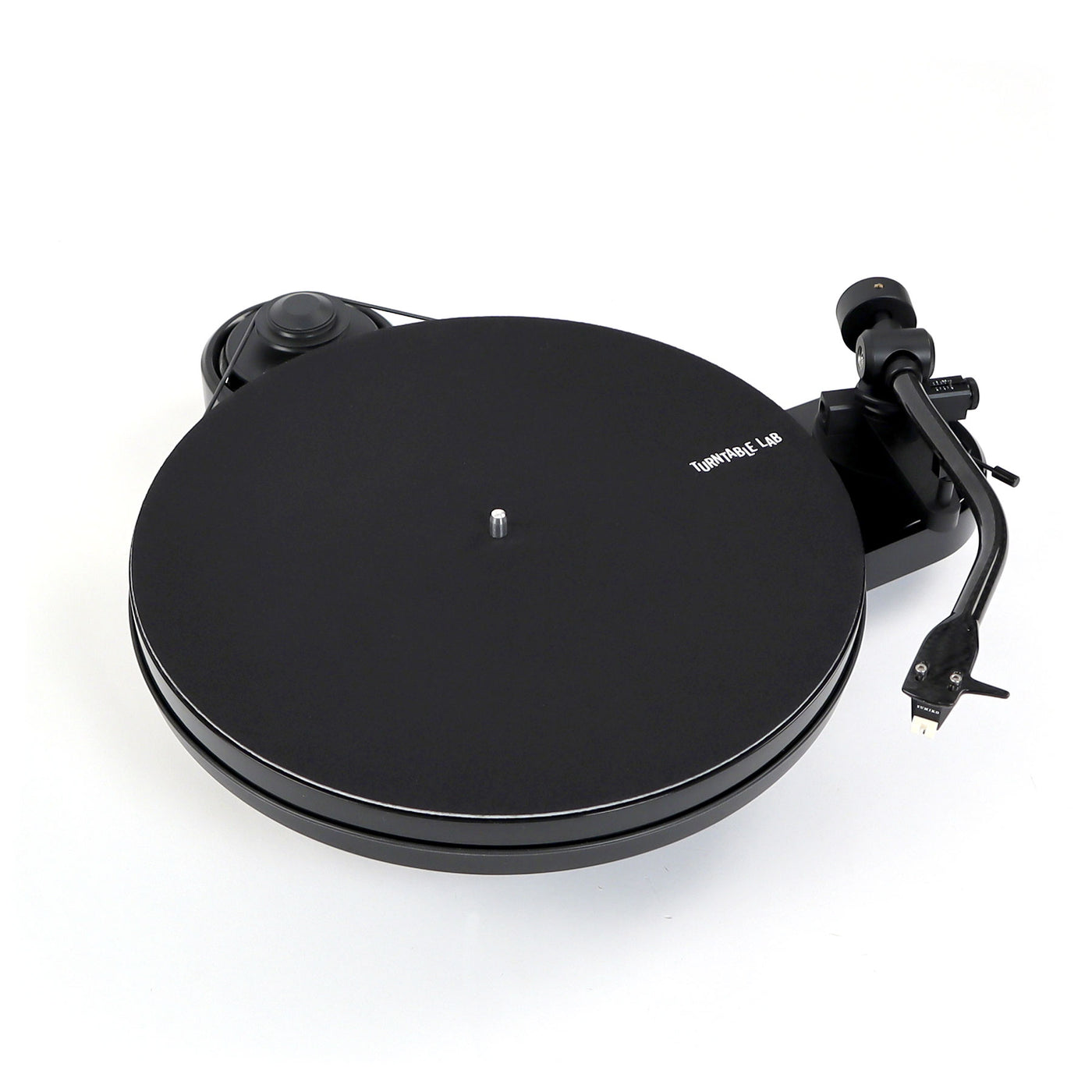
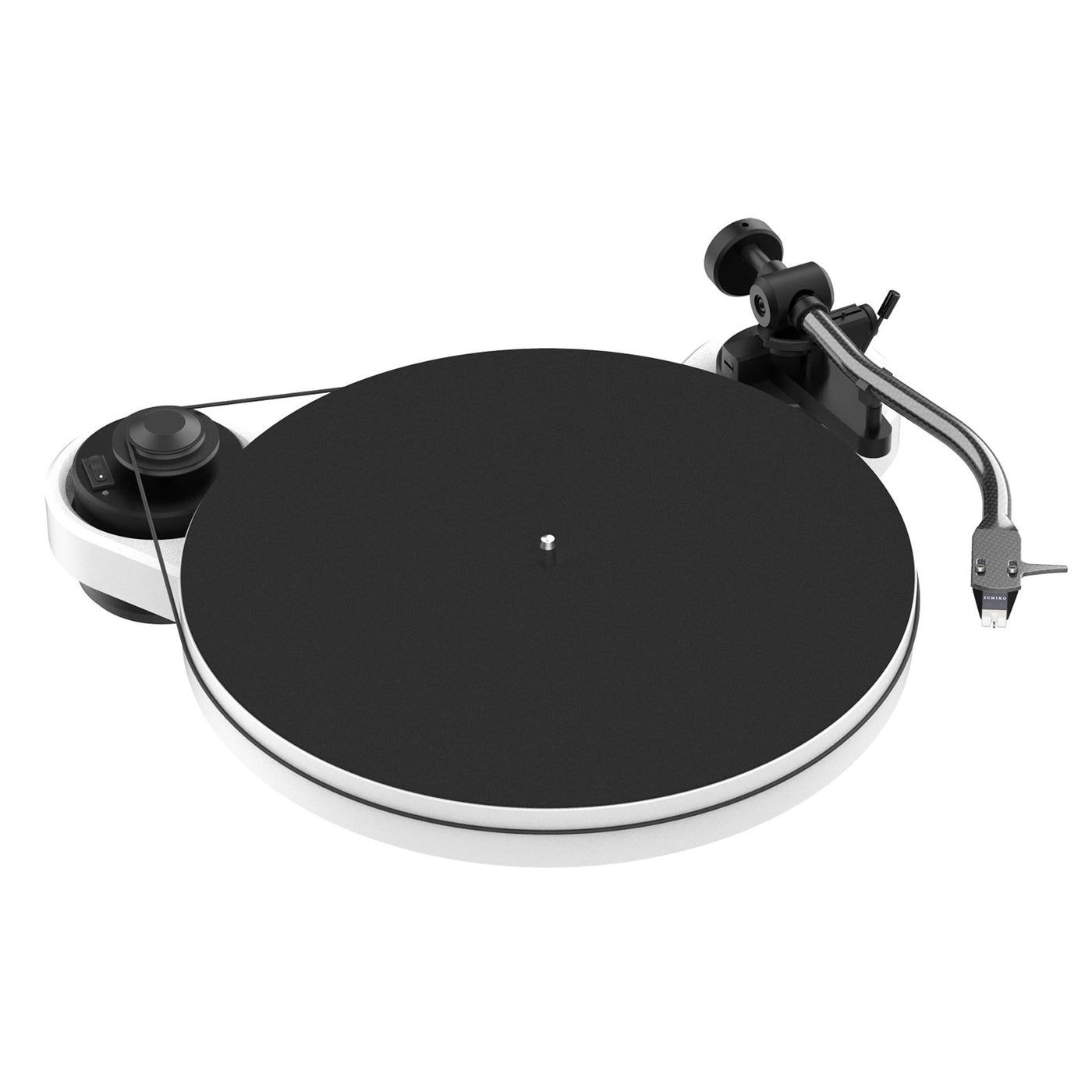
Gloss Black, White and Red are separate observed U.S.-facing item pages but share the same Rainier package identity and documented operation. I treat these finish changes as visual variants rather than additional functional turntables. Retailer product numbers and displayed UPCs are item references, not confirmed Pro-Ject model codes. The main review image shows Gloss Black; the two additional photos below are exact U.S. item-page finish references, not evidence of cartridge contents or condition.
Who should shortlist it—and what to verify
Shortlist the RPM 1 Carbon if a small manual deck with the Rainier MM package suits your system, you have a compatible phono stage, and manual speed changes are acceptable. Consider another model if you need a built-in stage, push-button speed selection, documented automatic end handling, a supplied dust cover or 78 RPM support. The U.S. listing and manufacturer documentation support the basic item identity and setup path, but they do not establish current availability, a price, listening performance, or every accessory in every later offer.
Before buying, confirm the exact Rainier/finish package and that the cartridge is present and undamaged; check the seller's current carton list, especially because the cover is not included on the observed listings; make sure the receiver PHONO input is MM-compatible or budget for an MM stage; and verify shelf clearance beyond the 14.96 × 13.78-inch body. The deck's removable phono lead, ground connection, motor operation, and belt setup should be checked against the exact manual. Those checks matter more than treating the two finishes as different performance models.
Key specifications
Key details at a glance
| Drive | Belt drive |
|---|---|
| Documented record speeds | 33 1/3 RPM / 45 RPM |
| 78-RPM play option | No |
| Included cartridge | Sumiko rainier moving-magnet cartridge, identified on the u.s.-facing black and white item pages. |
| Built-in phono preamp | No |
| Manual tonearm cueing | Yes |
| Platter | Mdf |
| Platter mat | Felt |
| Body width | 14.96 in |
| Body depth | 13.78 in |
| Body height | 4.33 in |
Use the exact model’s instructions for operating limits, supplied equipment and version differences.
Sources for this review
Sources for this assessment
- Pro-Ject RPM 1 Carbon official model page
- Pro-Ject RPM 1 Carbon product information sheet
- Pro-Ject RPM 1 Carbon / Ortofon 2M Red user manual
- Turntable Lab U.S. RPM 1 Carbon Gloss Black / Sumiko Rainier item page
- Turntable Lab U.S. RPM 1 Carbon White / Sumiko Rainier item page
- Sumiko official Oyster Series cartridge family
- Acoustic Sounds U.S. RPM 1 Carbon / Sumiko Rainier Black item page
- Acoustic Sounds U.S. RPM 1 Carbon / Sumiko Rainier White item page
- Acoustic Sounds U.S. RPM 1 Carbon / Sumiko Rainier Red item page
Check your phono route before choosing
Check each model's documented input route, arm operation, and body limits. Use the finder to compare supported phono-system arrangements without assuming adjacent models share features.