
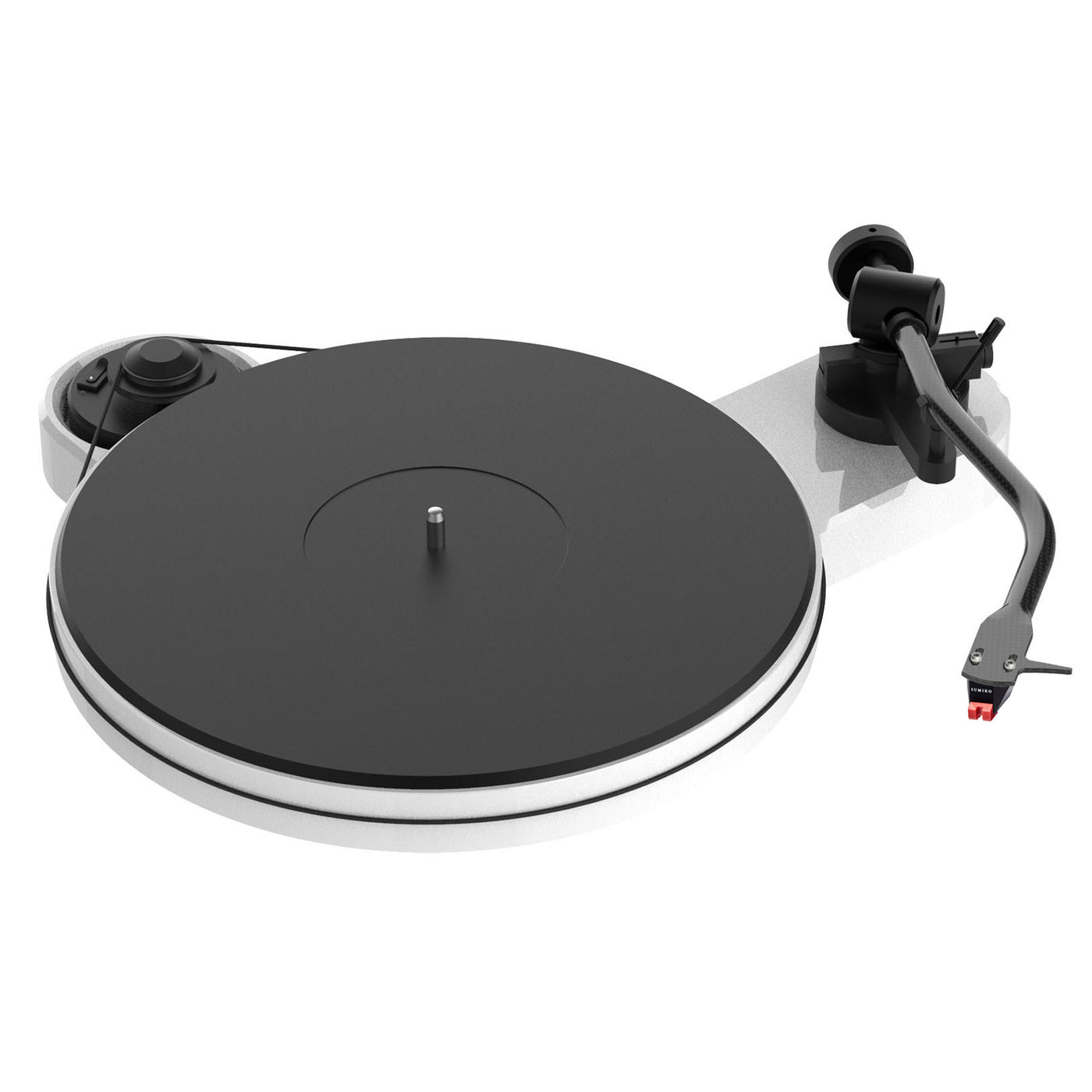
Your needs, this model
Does it fit your priorities?
Can the RPM 3 Carbon Moonstone package connect directly to line-only powered speakers?
No. Its documented output is phono level, so use a compatible MM PHONO input or insert an external MM phono stage before powered-speaker LINE. The observed package page says no dustcover is included.
Explore this need in the finder →Does the RPM 3 Moonstone item fit a shelf with a 17-inch body-width maximum?
Not on the conservative published screen: Turntable Lab lists 17.6 inches wide, while Pro-Ject's sheet lists about 16.61 inches. The mismatch needs checking against the exact delivered item; either value excludes a 17-inch maximum if you use the more conservative U.S. listing.
Explore this need in the finder →Will the RPM 3 Carbon stop or lift its arm after a record ends?
The maker identifies this as a manual turntable, and the manual documents belt speed changes and manual motor switching. The inspected sources do not confirm end-of-record platter stop or automatic arm return, so do not buy it expecting those functions without checking the exact version with the seller.
Explore this need in the finder →This review covers the observed U.S.-facing White Pro-Ject RPM 3 Carbon package with a Sumiko Moonstone moving-magnet cartridge. It is a source-led assessment of fit and setup, not a listening test, bench measurement or ownership claim. The manufacturer documentation explains the RPM 3 family, but its global Ortofon references do not establish this U.S. cartridge bundle; the separate U.S. item page identifies the Moonstone. One meaningful caveat appears before the system discussion: the seller and manufacturer publish conflicting body widths, so a tight shelf fit should not be decided from one number alone.
It needs an MM phono stage
The RPM 3 Carbon has no documented internal phono preamplifier. The user manual specifies phono-level RCA output and a ground terminal, and directs a suitable PHONO input or a separate phono stage ahead of an ordinary line input. The Moonstone is part of Sumiko's moving-magnet Oyster family, so a compatible MM stage is the sensible match for this observed package. A receiver PHONO input is suitable only if its documentation supports MM cartridges. With powered speakers that have line input but no phono input, an external MM phono stage sits between the deck and speaker pair. With passive speakers, the stage still needs to feed a receiver or power amplifier. The turntable includes neither speakers nor speaker amplification.
That division is worth checking before selecting this package. It does not have a switchable line output, and connecting cartridge-level signal directly to an AUX or ordinary powered-speaker input is not equivalent to using a phono stage. Connect the ground lead as the turntable and amplifier manuals specify; do not infer an internal preamp from the fact that an RCA cable is used.
A hands-on operating routine, not an automatic deck
Pro-Ject calls this a manual belt-drive turntable. Its information sheet and manual describe 33⅓ and 45 RPM operation, with speed changed by moving the belt between motor-pulley steps. The documents examined do not list 78 RPM, an electronic speed button, automatic arm return or an end-of-record stop. The motor switch only confirms motor control; it does not make the arm automatic. Plan to cue the arm and end playback yourself. If record-end lift or platter stop is essential, ask about the exact revision and obtain model-specific confirmation rather than assuming a generic feature from the RPM name.
The 10-inch S-shaped arm is described by Pro-Ject as a carbon, aluminium and resin construction. The product sheet also identifies a 300 mm MDF platter with an integrated vinyl layer. Those terms distinguish the physical design; they are not a substitute for a controlled listening comparison. The user manual was issued for the maker's original Ortofon configuration, whereas the U.S. item page identifies a Sumiko Moonstone. Do not copy the manual's original cartridge adjustment values onto the Moonstone. Use the cartridge-specific directions for setup, and check that a used or open-box package still contains its counterweight, belt, mat and other required parts.
Space, cover and a published-width conflict
Pro-Ject's sheet lists 422 × 118 × 373 mm, approximately 16.61 × 4.65 × 14.69 inches (W × H × D), and 5.5 kg. The observed Turntable Lab U.S. item page instead lists 447 × 118 × 373 mm, or 17.6 × 4.65 × 14.6 inches. Height and depth are close, while the width differs by nearly an inch. The finder and conservative fit advice use the larger 17.6-inch seller figure so a nominal shelf under that width is not casually marked compatible. That is a screening precaution, not resolution of the underlying discrepancy; verify the delivered item's actual plinth and allow further space for cables, tonearm access and operation. Published body dimensions do not include those clearances.
The exact U.S. listing says no dustcover is included, and the manufacturer's sheet calls the lid optional. Confirm a compatible cover separately if you need one and check its footprint when raised; optional accessories affect storage and shelf planning. The exact listed White/Moonstone package is the configuration reviewed here. Other global finish or cartridge combinations are not silently treated as U.S. listings. Retailer SKU and UPC are item references, not a canonical manufacturer part number.
Shortlist by the system you actually have
The RPM 3 Carbon makes sense for a buyer who values this observed MM cartridge package, accepts manual belt changes and tonearm handling, and has a separate MM phono route. It is less suitable for someone wanting a plug-and-play line output, automatic operation, verified auto-stop, or a shelf that cannot tolerate the seller's more conservative 17.6-inch width. For a smaller footprint, compare the RPM 1 Carbon; for a documented built-in stage or automatic features, compare a different model with those exact functions explicitly listed.
Before ordering, check that the item really is the White/Moonstone U.S. package; ask the seller to clarify the 422-versus-447 mm width for the exact unit; confirm MM phono compatibility; verify the cover is a separate purchase if required; and use the correct cartridge setup instructions. No price, stock status or sound-quality conclusion is inferred from the archived seller page. The recommendation rests on identifiable system requirements, published dimensions and documented operation—not on an unperformed listening test.
Key specifications
Key details at a glance
| Drive | Belt drive |
|---|---|
| Documented record speeds | 33 1/3 RPM / 45 RPM |
| 78-RPM play option | No |
| Included cartridge | Sumiko moonstone moving-magnet cartridge, identified by the exact u.s. white item page. |
| Built-in phono preamp | No |
| Manual tonearm cueing | Yes |
| Platter | Mdf |
| Platter mat | Integrated vinyl layer (manufacturer description) |
| Body width | 17.6 in |
| Body depth | 14.69 in |
| Body height | 4.65 in |
Use the exact model’s instructions for operating limits, supplied equipment and version differences.
Sources for this review
Sources for this assessment
Check your phono route before choosing
Check each model's documented input route, arm operation, and body limits. Use the finder to compare supported phono-system arrangements without assuming adjacent models share features.