
Your needs, this model
Does it fit your priorities?
Will the X2 B Quintet Red work with a receiver PHONO input?
Only if that PHONO input is explicitly compatible with the included moving-coil Quintet Red. An MM-only PHONO input is not enough; otherwise use a correctly matched external MC stage.
Explore this need in the finder →What does the X2 B need for powered speakers?
Run its RCA/ground phono output into an MC-compatible phono stage, then take the stage's line output to the powered speaker LINE input. The turntable has no built-in phono stage.
Explore this need in the finder →Can I use the X2 B if manual cueing is acceptable?
Yes. The manual describes user-operated tonearm lift and power control. Electronic speed selection does not place, return or automatically lift the arm.
Explore this need in the finder →Will its listed body depth fit a 13.5-inch limit?
The manufacturer lists 340 mm (about 13.39 inches) as body depth, within that cap. A separate retailer lists a larger cover-down measurement, so verify the exact unit, lid position and cable clearance before treating the shelf as a fit.
Explore this need in the finder →This assessment covers the U.S.-facing Turntable Lab listing for the Pro-Ject X2 B with its Ortofon Quintet Red moving-coil cartridge—not the separate Sumiko Rainier U.S. package documented by Pro-Ject. That distinction changes the phono-stage match. The Quintet Red listing needs an MC-compatible input or separate MC stage; the turntable does not add phono equalization. This is source-based analysis, not a listening test or ownership report.
Choose the cartridge package before planning the system
Pro-Ject's global X2 B information names a pre-adjusted Ortofon Quintet Red MC cartridge, and the exact U.S.-facing seller page describes that same package. The seller's product data identifies four separate finish options—Gloss Black, White, Walnut and Satin Black—with their own product images and variant records. The item's white code matches the Quintet Red white configuration in product references. Separately, Pro-Ject's 2024 guide identifies an X2 B Sumiko Rainier U.S. version, and a Crutchfield U.S. item page describes a Satin White X2 B with a pre-mounted Rainier MM cartridge. I keep those two packages separate rather than treating one page's description as a universal U.S. specification.
For the Quintet Red package, use an amplifier or receiver PHONO input explicitly compatible with a moving-coil cartridge, or route the turntable's RCA/ground phono output through a separate MC phono stage. For powered speakers, that stage must sit before a line input. For passive speakers, connect the stage to an amplifier's LINE/AUX input and let the amplifier provide speaker power. A generic MM-only PHONO input is not enough. The manual specifically warns that an unsuitable PHONO input or a line input without a phono stage will not correctly match the cartridge.
Balanced output is an option with conditions, not an instant complete chain
The deck has RCA phono sockets and a 5-pin mini-XLR phono output. The Quintet Red is an MC cartridge, which meets Pro-Ject's stated cartridge requirement for its True Balanced connection. Even so, the balanced route needs a separately chosen compatible balanced phono cable and a phono stage with the matching balanced input. The included Connect it E is an RCA phono cable; the mini-XLR jack alone does not create a balanced system. If a balanced preamp is not part of the plan, the regular RCA route remains the straightforward one, with the right MC loading and gain at the next component.
This connection distinction is more useful than treating the letter B as a sound claim. The manufacturer's description explains its balanced architecture, but it does not establish a result in every home, a reduction that every user will hear, or a universal compatibility guarantee. Identify the cartridge, connector and phono-stage input together before buying a cable or preamp.
Manual setup, three speeds and the work behind 78 RPM
The X2 B is manually operated. The manual's user steps include assembling the platter and belt, balancing the arm, setting tracking force and anti-skating, raising or lowering the tonearm, and pressing the main power control. Electronic selection covers 33 and 45 RPM with the flat belt. For 78 RPM, the user must remove the platter, replace the flat belt with the supplied round belt, then select 78. That is a real three-speed capability, but the Quintet Red is not documented as a shellac/78 stylus; a compatible cartridge and stylus are a separate record-specific requirement.
Do not mistake electronic speed switching for automatic arm handling. The manual describes manual cueing and does not specify automatic start or return. It does not establish an end-of-record auto-stop function, so this assessment treats auto-stop as unknown rather than promising that the platter will stop on its own. Anyone who expects unattended playback should verify the behavior of the exact unit rather than infer it from the speed button or the balanced designation.
Substantial body; measure the actual installation
Pro-Ject publishes 460 × 150 × 340 mm (W × H × D), about 18.11 × 5.91 × 13.39 inches, and a 10 kg net weight. That is a body reference, not an operating envelope. A retailer page gives a different, larger measurement with the dust cover down; treat the figures as different measurement contexts and confirm the deck's actual dimensions, cover position and cable bend for the specific shelf. Leave room for the lid, record handling, arm access, rear cabling and ventilation rather than placing the cabinet flush to a numerical body limit.
Finish images and exact-option checks
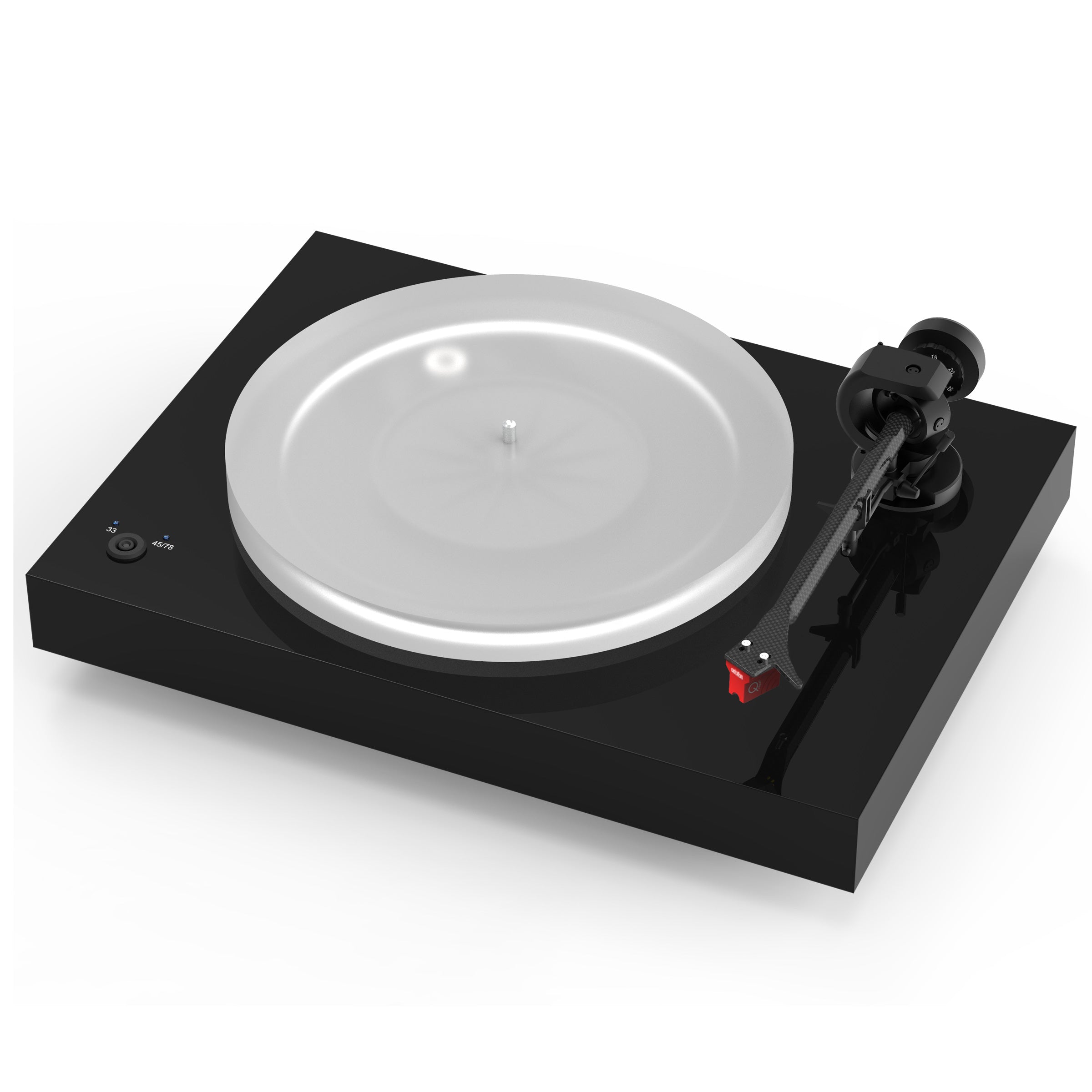
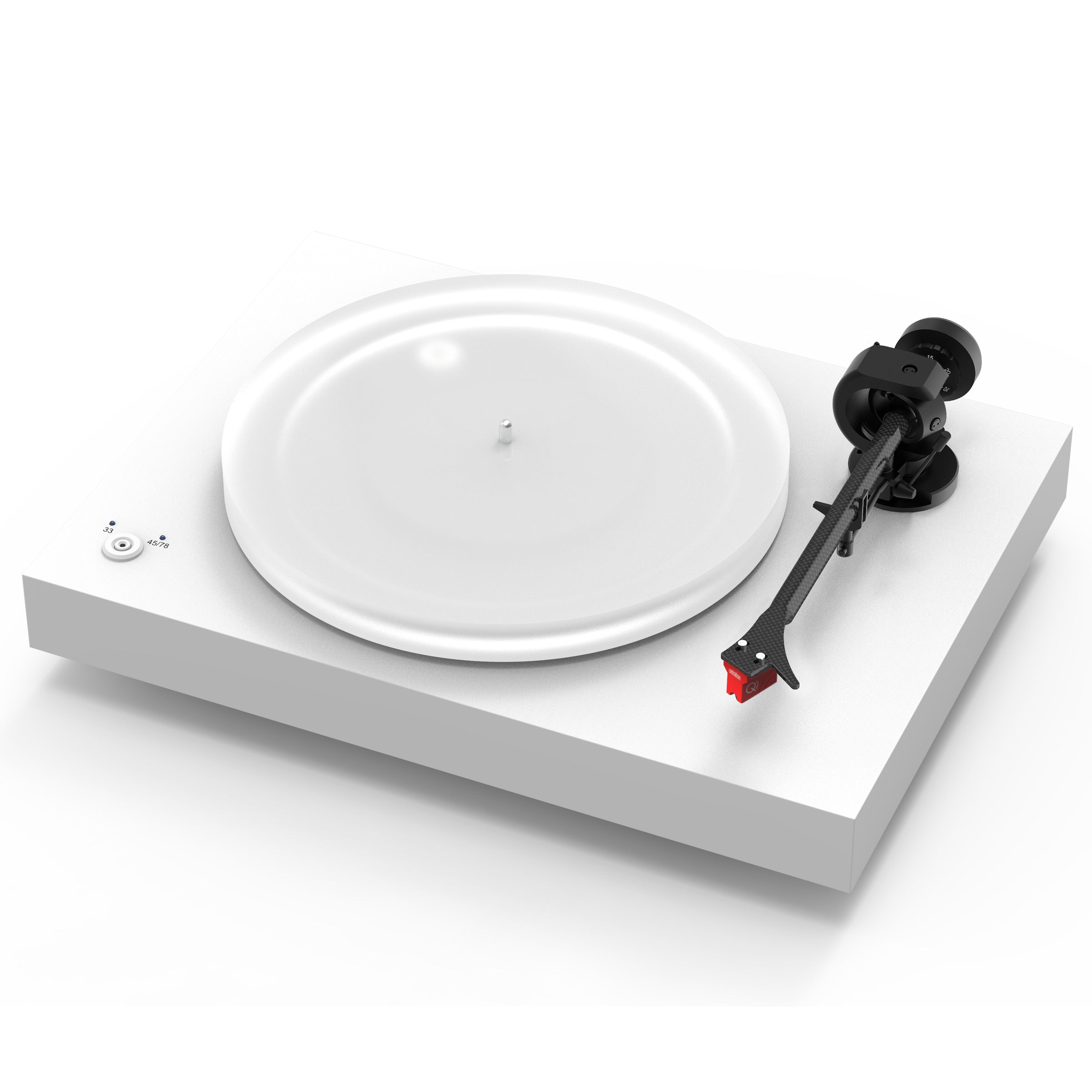
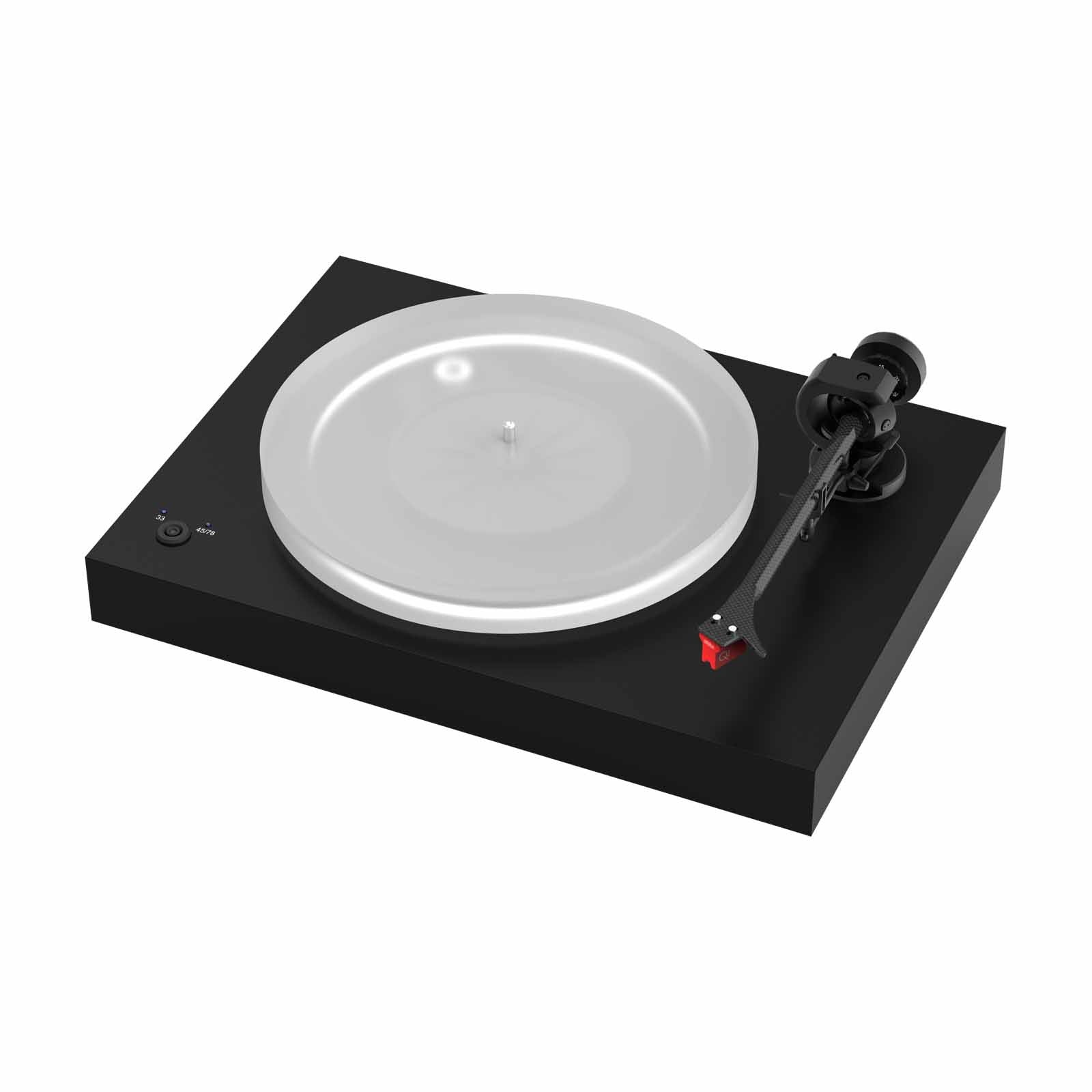
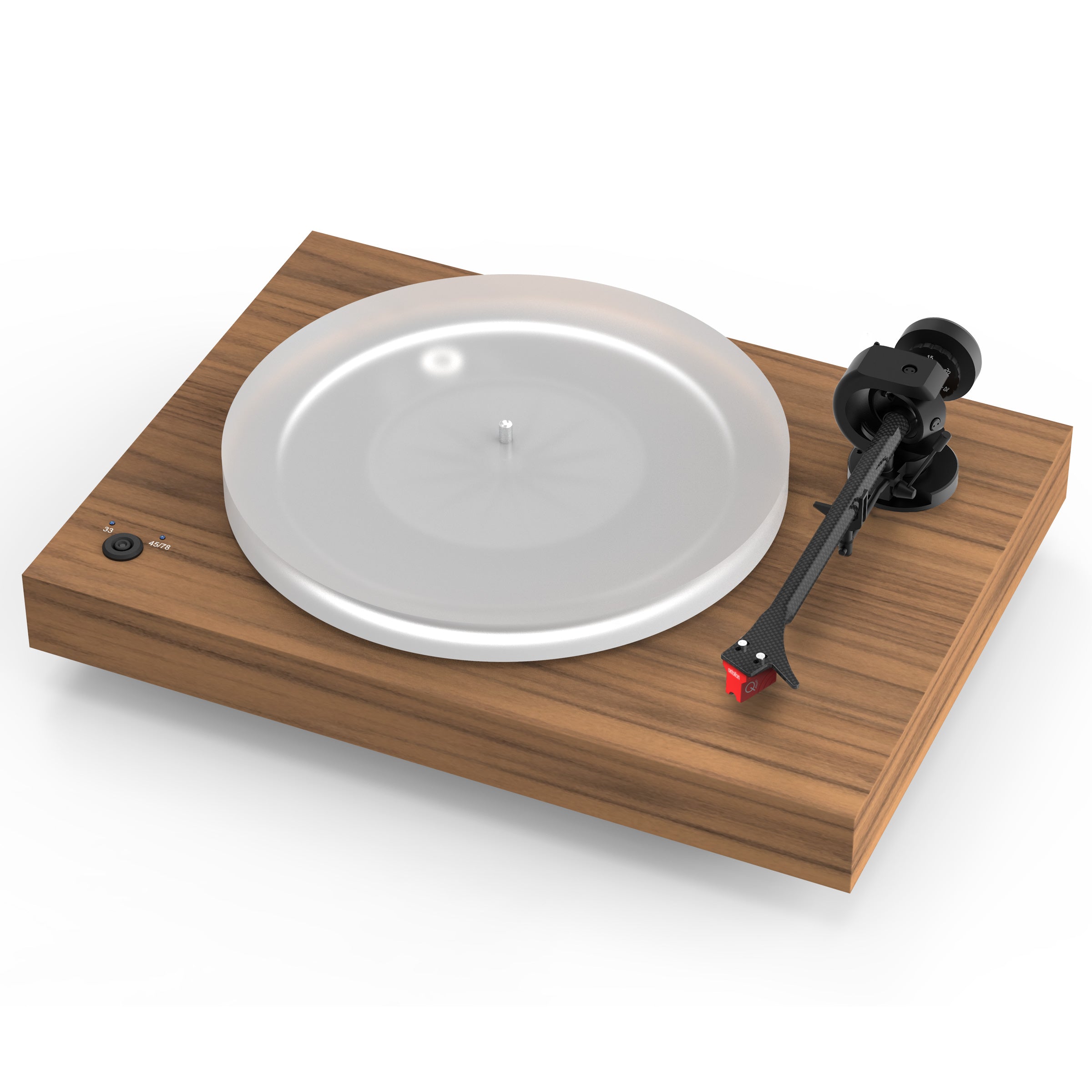
The four images below map to individual finish variants on the seller page. Finish is the visible difference documented here; the listed package remains Quintet Red. The photographs do not establish condition, a live offer or a different cartridge configuration.
Purchase checks and bottom line
Before choosing this listing, confirm the exact finish and cartridge on the retailer record; do not substitute the Rainier MM version. Check that the PHONO input or separate stage supports MC. True-balanced routing also needs the mini-XLR cable and compatible balanced stage. Verify the 78 belt procedure and suitable stylus, tracking setup, cover clearance, included parts and shelf dimensions.
On paper, the Quintet Red version suits someone seeking a manually operated three-speed deck with a factory-fitted MC cartridge and phono-level RCA and mini-XLR outputs. Its tradeoffs are a compatible MC stage, separate balanced-chain components, a belt-and-stylus change for 78 records and no documented automatic arm handling. It is not a fit for a built-in-preamp-only request or an MM-only PHONO input.
Key specifications
Key details at a glance
| Drive | Belt drive |
|---|---|
| Documented record speeds | 33 1/3 RPM / 45 RPM / 78 RPM after fitting the round belt |
| 78-RPM play option | Yes |
| Included cartridge | Pre-adjusted ortofon quintet red moving-coil cartridge |
| Built-in phono preamp | No |
| Manual tonearm cueing | Yes |
| Platter | Acrylic, 30 mm thick and 2 kg |
| Platter mat | Felt |
| Body width | 18.11 in |
| Body depth | 13.39 in |
| Body height | 5.91 in |
Use the exact model’s instructions for operating limits, supplied equipment and version differences.
Sources for this review
Sources for this assessment
- Pro-Ject X2 B official model page
- Pro-Ject X2 B official Product Information
- Pro-Ject X2 B official user guide, revision 2025-12-12
- Pro-Ject 2024 Product Guide, X2 B package distinction
- Turntable Lab U.S.-facing X2 B seller listing, rendered observation
- Turntable Lab X2 B variant data, exact seller option and image mapping
- Turntable Lab exact X2 B White variant image

Check your phono route before choosing
Check each model's documented input route, arm operation, and body limits. Use the finder to compare supported phono-system arrangements without assuming adjacent models share features.