
Your needs, this model
Does it fit your priorities?
Can I use the built-in phono stage with powered speakers?
Yes, when you select the Built-in Pluto 2 configuration. The Orbit connection guide says the enabled preamp supplies line level to powered speakers with analog RCA/AUX input or to an amplifier LINE input. The common setup manual says the bypass switch/LED indicates preamp state. Check the exact offer rather than assuming this selectable feature is included.
Explore this need in the finder →Can this Orbit use a receiver PHONO input?
Yes, if you select the no-preamp configuration and the receiver has a compatible PHONO input. The receiver supplies the phono stage and amplification. Do not send an enabled built-in-stage line output to a PHONO input.
Explore this need in the finder →Can it work with line-input powered speakers if I add a separate phono stage?
Yes, select the no-preamp configuration and put a compatible external phono stage between the Orbit RCA output and powered speakers with analog line input. The speaker must provide its own amplifier.
Explore this need in the finder →Can it work with passive speakers and a separate stage?
Yes. With no built-in stage selected, connect the Orbit to a compatible external phono stage and then feed that stage’s line output to an amplifier/receiver line input driving passive speakers. With the built-in preamp option enabled, use the amplifier line input instead of PHONO.
Explore this need in the finder →Is the Orbit fully automatic or equipped with record-end auto-stop?
No fully automatic arm sequence is documented; the manual describes belt installation and manual speed changes, and the product page treats the cue lever as a manual aid. A record-end platter auto-stop is not specified, so the model should not be chosen to satisfy a required auto-stop feature.
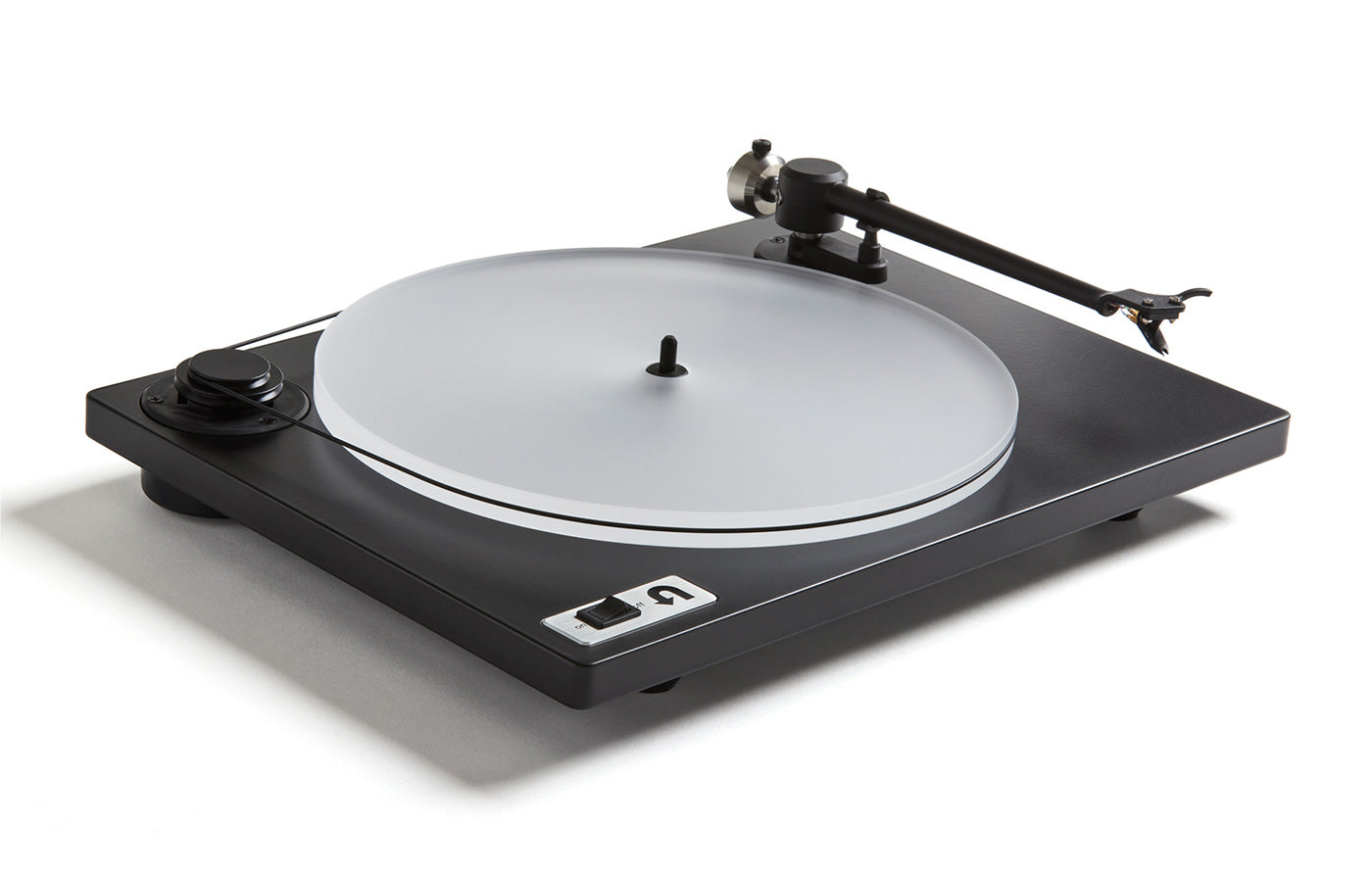
Explore this need in the finder →The current U-Turn Orbit Plus occupies a specific middle ground in the manufacturer’s Orbit lineup: it keeps the manually moved belt of the Basic but substitutes a grooved acrylic platter and Ortofon OM5E cartridge with an elliptical stylus. It shares the current OA3 magnesium tonearm family and 16.75 × 12.5 × 4.25-inch body dimensions with the other current Orbit decks. The name can be confusing because U-Turn’s collection also lists a distinct “Orbit Plus (Gen 1).” This review covers the current Plus product page, not that earlier entry. It is a documentary review; no listening, hands-on setup or measurement was performed.
What changes from Orbit Basic
The current Orbit Plus page identifies the OM5E moving-magnet cartridge and acrylic platter as its defining package changes. The elliptical stylus shape differs from the AT91B conical stylus supplied with Basic, and the acrylic platter is a different material from Basic’s grooved MDF platter. These details give a shopper a real reason to compare the variants: the supplied stylus package and platter are not identical, although both decks remain fully manual two-speed belt-drive models. The included OM5E is factory-fitted according to the product description; replacing or realigning a cartridge later still requires careful setup and compatible parts.
Speed selection remains a physical belt move between positions for 33⅓ and 45 RPM. There is no electronic speed knob on the current Plus page; that is a Special distinction. The manufacturer publishes the same 16.75-inch width, 12.5-inch depth and 4.25-inch height as Basic and Special, plus a wow/flutter figure below 0.125%, a -79 dBA signal-to-noise ratio and rumble below -63 dBA. These are listed factory specifications, not measurements independently collected for this assessment. Plan for more than the stated body footprint so that cables, the dust cover and the tonearm are not pressed against a wall or shelf edge.
The two preamp choices are not interchangeable
The Plus page presents None and Built-in phono-stage choices. If you select None, connect the turntable to an amplifier/receiver PHONO input or insert an external phono stage. That external stage can feed powered speakers’ line input, or feed an amplifier/receiver LINE input that powers passive speakers. A PHONO input is only the right destination when the Orbit is configured without its internal stage. U-Turn’s connection guide describes the receiver, powered-speaker and modular arrangements; the family manual explains that an equipped built-in stage is enabled or bypassed with its switch and indicator.
If you select Built-in, the optional Pluto 2 stage provides line output. The maker’s guide supports connection to powered speakers with analog inputs or to an amplifier’s line input. Do not stack phono equalization by connecting that enabled line output to a receiver’s PHONO input. The offer’s actual selector configuration matters: the bare model name does not tell you which option was selected, and no default configuration is inferred here. Neither the standalone Plus deck nor the optional preamp adds speaker drivers or amplifier power for passive speakers.
Manual use and setup trade-offs
Orbit Plus is not a fully automatic turntable. The setup guide shows platter and belt installation, leveling and manual belt movement for speed changes; it does not establish automatic starting, arm lift or automatic return. The page lists a cueing lever as optional, a manual convenience for lowering or raising the arm. If this is part of your intended configuration, verify it on the final offer or order. A cueing lever is not an automatic mechanism. The reviewed page and setup manual do not specify an end-of-record auto-stop, and the manufacturer lists only 33 and 45 RPM; do not choose this deck if a documented stop or 78 playback is a hard requirement.
Out-of-box setup still requires care with the platter, belt, tonearm balance, stylus guard and signal route. The page’s in-box section names a dust cover, felt mat, AC adapter, RCA cables and the turntable. Confirm that the record, extra speaker cables, phono stage or speakers you need are not being assumed as part of the standalone deck package. If buying used, inspect the installed OM5E and stylus, arm bearing movement, belt condition, acrylic platter surface, counterweight and dust-cover hinges. These are sensible checks rather than an assertion that this review physically inspected a used item.
Compare it with Special before choosing
The Orbit Basic is the more restrained package, with an AT91B conical cartridge and MDF platter; Plus is the version to compare if the acrylic platter and OM5E elliptical stock cartridge are central to your requirements. The current Orbit Special uses the Ortofon 2M Red and acrylic platter, includes a cue lever, and switches 33/45 electronically rather than by moving the belt. That extra speed convenience does not make Special automatic, and all three model pages offer an optional built-in preamp configuration. Buyers should distinguish those real package changes from finish choices, which do not by themselves justify a separate functional review.
Orbit Plus fits best for someone who wants its particular cartridge/platter combination, accepts manual cueing and speed changes, and can match the preamp selection to the rest of the system. Before ordering, verify that the listing is the current Plus and not Gen 1, the exact preamp option and optional cue lever, whether a suitable stylus remains fitted, amplifier input type, required speakers and the space around the deck. The published dimensions are body measurements, not installation clearance. No price, stock level, direct listening verdict, test result or ownership claim is made.
Primary references: U-Turn Orbit Plus current product page, the Orbit setup guide, and U-Turn’s turntable connection guide.
Key specifications
Key details at a glance
| Drive | Belt drive |
|---|---|
| Documented record speeds | 33 1/3 RPM / 45 RPM |
| 78-RPM play option | No |
| Included cartridge | Ortofon om5e moving-magnet cartridge with elliptical diamond stylus |
| Built-in phono preamp | Yes |
| Manual tonearm cueing | Yes |
| Platter | Acrylic |
| Platter mat | Felt |
| Body width | 16.75 in |
| Body depth | 12.5 in |
| Body height | 4.25 in |
Use the exact model’s instructions for operating limits, supplied equipment and version differences.
Sources for this review
Sources for this assessment
Check your phono route before choosing
Check each model's documented input route, arm operation, and body limits. Use the finder to compare supported phono-system arrangements without assuming adjacent models share features.